


Understanding condolence floral choices: a guide
TL;DR:
- Choosing appropriate condolence flowers involves understanding their symbolism, cultural significance, and relationship with the deceased to ensure a heartfelt, respectful tribute. White lilies, roses, and carnations typically convey peace, reverence, and remembrance, making them ideal choices for expressing sympathy. Always confirm family preferences before ordering, and consider sincerity and personal connection to create a meaningful gesture.
When someone you care about is grieving, words often fail. Flowers step in where language cannot, carrying meaning, comfort, and respect across the silence of loss. Understanding condolence floral choices matters more than most people realise, because not every bloom carries the same message, and the wrong choice can feel jarring rather than consoling. This guide will help you navigate the symbolism, cultural considerations, and practical decisions involved in selecting sympathy flowers, so that your gesture genuinely honours the person who has passed and supports those left behind.
Table of Contents
- Key takeaways
- Understanding condolence floral choices: the traditional flowers
- Relationship, culture, and religion
- Arrangement types and practical considerations
- Modern trends and common pitfalls
- Making your tribute meaningful and respectful
- My perspective on flowers and grief
- Blüme’s condolence flower arrangements
- FAQ
Key takeaways
| Point | Details |
|---|---|
| Symbolism varies by flower | White lilies, roses, and carnations each carry distinct meanings that shape how your tribute is received. |
| Relationship guides arrangement type | Close family typically send casket sprays, while friends and colleagues send wreaths, posies, or sheaves. |
| Culture and religion matter | Flower colour and type preferences shift significantly depending on cultural background and faith. |
| Always check family wishes | Some families request donations instead of flowers; confirm before ordering to avoid causing distress. |
| Sincerity outweighs size | A simple, heartfelt arrangement with a handwritten note often means more than an elaborate display. |
Understanding condolence floral choices: the traditional flowers
The tradition of sending flowers to the bereaved is centuries old, and certain blooms have become synonymous with sympathy for very good reason. White lilies are the most universally recognised sympathy flower, symbolising the restored innocence of the soul and offering a sense of peaceful transition. Their presence at funerals across Western cultures is almost universal, and their clean, uncluttered beauty does much of the emotional heavy lifting without demanding attention.
White roses are another cornerstone of sympathy floristry. They speak of reverence, eternal love, and spiritual honour. Where a red rose expresses romantic passion, the white variety turns that intensity into something quieter and more enduring. Carnations, particularly white ones, represent pure love and remembrance, and they hold up extraordinarily well as cut flowers, making them a practical as well as meaningful choice.
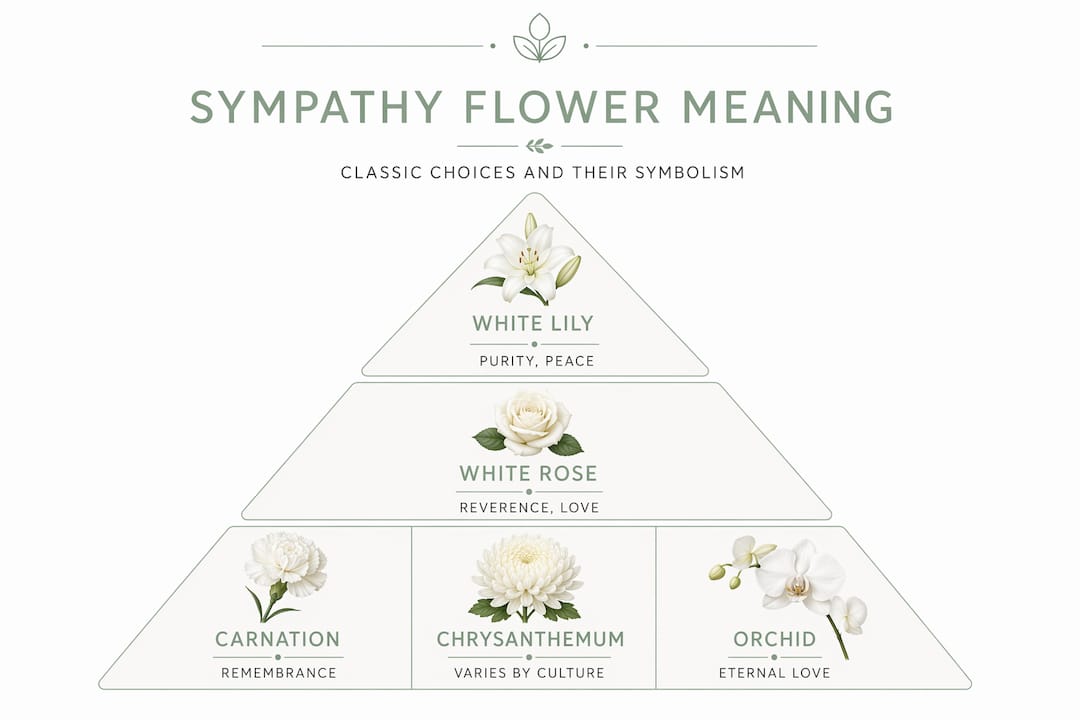
Chrysanthemums deserve particular attention because their symbolism changes dramatically depending on where you are in the world. In the United Kingdom, Europe, and Australia, chrysanthemums signal grief and respect, making them entirely appropriate for funerals. In certain Asian cultures, however, white chrysanthemums carry specific and deeply rooted funeral associations, which means their meaning is understood and respected across a wider range of traditions than many people realise.
| Flower | Symbolic meaning | Best context |
|---|---|---|
| White lily | Purity, peace, restored innocence | Funeral services, casket sprays |
| White rose | Reverence, eternal love, honour | Wreaths, bouquets, home tributes |
| Carnation | Remembrance, pure love | Posies, sheaves, mixed arrangements |
| Chrysanthemum | Grief, respect | Wreaths, formal tributes |
| White orchid | Everlasting love, refinement | Home sympathy gifts, potted plants |
Pro Tip: If you are unsure which flower to lead with, white lilies paired with white roses create a timeless and universally appropriate combination that works across almost every cultural and religious context.
Relationship, culture, and religion
The relationship you had with the deceased shapes not just how much you send, but what form that tribute should take. Funeral flower types align closely with the closeness of the relationship. Immediate family members typically provide large casket sprays or coffin covers, which are the centrepiece floral tributes displayed directly on or beside the coffin. These are significant, formal gestures that signal the closest bonds.
Friends and colleagues generally send wreaths, sheaves, or posies. A wreath carries its own symbolism, representing eternity through its circular form. A sheave or hand-tied bouquet feels more personal and informal, often better suited when the relationship was warm but not immediate family.
Cultural background plays a significant role that many people overlook. Choosing flowers with an awareness of cultural and personal context improves the contribution your tribute makes to the occasion. Some East Asian families reserve white chrysanthemums specifically for funeral and mourning contexts, so they carry great weight and should be chosen deliberately. In some South Asian and Middle Eastern traditions, floral tributes may play a smaller role or follow specific colour conventions entirely different from Western norms.
Religious beliefs add another layer of consideration:
- Christian traditions generally welcome flowers of all kinds at services, with white blooms being the most conventional choice.
- Jewish traditions vary by denomination; some conservative communities discourage flowers at funerals entirely, preferring donations to charity.
- Muslim funerals rarely include flowers as part of the service itself, though sympathy flowers sent to the family home are often appreciated.
- Hindu and Sikh traditions may use flowers as part of the service, but the specific customs vary by region and family practice.
Pro Tip: When in doubt, contact the funeral director before ordering. They will know the family’s preferences and can advise on whether flowers are appropriate and what form is most fitting.
Arrangement types and practical considerations
Floral arrangements vary widely, and choosing the right form matters as much as choosing the right flowers. Here is a clear breakdown of the main types and when each is most appropriate:
- Casket sprays: Large, formal arrangements placed directly on the coffin. These are almost always provided by the immediate family and represent the most prominent floral tribute at the service.
- Wreaths and crosses: Circular or cross-shaped arrangements that carry symbolic meaning, representing eternal life or Christian faith respectively. Suitable for close friends, family, and professional associates.
- Sheaves and posies: Hand-tied bouquets that feel personal and sincere. Sheaves are laid flat; posies are rounder and more compact. Both work well for friends and colleagues.
- Floral letter tributes: Shaped tributes spelling names or words such as ‘Nan’, ‘Dad’, or ‘Brother’ add a deeply personal dimension and are most commonly sent by close family members.
- Potted plants: White Phalaenopsis orchids are a particularly valued choice, representing everlasting love while offering lasting beauty in the home long after the service has passed.
Timing matters considerably. Aim to have funeral flowers delivered to the funeral home or chapel the morning of the service, or the evening before. Most funeral directors will co-ordinate this if you communicate the service time when ordering.
Size is worth thinking about carefully. Large sprays can overwhelm intimate graveside services, creating practical difficulties for the family and potentially feeling out of place in a smaller setting. Match the scale of your tribute to the setting and your relationship to the deceased.
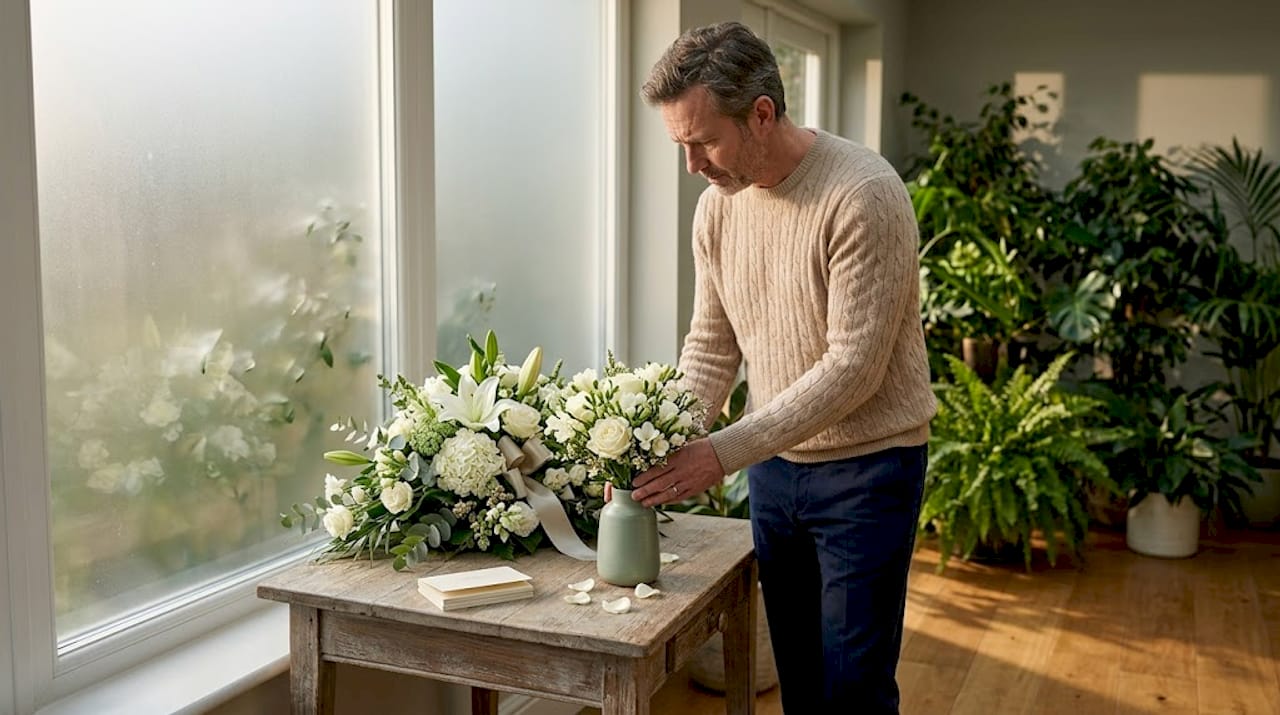
You should also consider scent sensitivity. Lilies are beautiful but their fragrance is strong. In enclosed venues with elderly attendees or those with respiratory sensitivities, a less heavily scented arrangement may be kinder. For elegant sympathy flowers that balance beauty with discretion, a florist experienced in funeral arrangements will always be your best guide.
Modern trends and common pitfalls
Contemporary sympathy floristry has evolved well beyond the strict white-only palette. Modern sympathy flowers now incorporate anthuriums, proteas, and eucalyptus for a more sculptural, contemporary feel. These choices reflect a growing preference for arrangements that honour an individual’s personality rather than defaulting to convention. A keen gardener might be honoured with a wildflower tribute; a lover of bold colour might be remembered with deep purples and blush pinks.
That said, certain colours remain worth avoiding unless the family has specifically requested them. Yellow flowers carry Victorian-era associations with rejection and disappointment, and bright, celebratory palettes can feel tonally at odds with the gravity of the occasion. Orange and vibrant red similarly risk appearing festive rather than respectful unless the family has indicated a celebration-of-life style service.
Fragrance is another practical consideration. Strong perfume from dense floral arrangements can cause discomfort in enclosed chapels or for those with sensitivities.
Pro Tip: Engage a florist experienced with funerals before finalising your order. They can advise on what is currently appropriate for the service type, venue, and family background, saving you from well-intentioned but ill-judged decisions.
A common mistake is defaulting to the largest or most expensive option under the assumption that scale equals sincerity. It does not. A thoughtfully chosen arrangement that reflects the deceased’s character or the family’s known preferences will always carry more weight than an impressive but generic display.
Making your tribute meaningful and respectful
Choosing the right flowers is only part of the gesture. How you send them, and what you include, shapes how they are received.
- Reflect the deceased’s personality. If you knew them well, let that knowledge guide the flowers. A gardening enthusiast might be best honoured with garden varieties. Someone with a love of elegance might suit a refined all-white arrangement.
- Write a handwritten note. A personal, handwritten message transforms any floral gift. Keep it sincere and brief. Funeral flowers express what words cannot, but a few written words anchor that emotion to something the family can hold.
- Check the family’s wishes first. Always look at the obituary or ask a mutual friend whether the family has made requests. Some families ask for donations in lieu of flowers, and respecting that wish is itself a form of care.
- Communicate with the funeral director. If you are uncertain about timing, delivery, or appropriate arrangement type, the funeral director is always the right person to ask. They handle these situations every day and will not find your questions intrusive.
- Consider plants for lasting comfort. Cut flowers are beautiful but brief. A potted orchid or a small plant sent to the family home offers something that endures beyond the week of the service, providing quiet comfort during the longer weeks of grief.
- Let sincerity lead. A modest arrangement sent with genuine care will always be received more warmly than an extravagant display chosen from obligation.
My perspective on flowers and grief
I have spent years working with flowers in some of their most emotionally charged contexts, and condolence arrangements remain among the most instructive. What strikes me most, time and again, is how much these choices reveal about the giver. People often agonise over getting it right, and that anxiety itself speaks to how much they care.
What I have learned is that sympathy flowers offer a unique form of communication that no other gesture quite replicates. They are visible, present, and alive in a moment when grief can feel very still and silent. The families who receive them are not usually critiquing the flower choice. They are registering the fact that someone cared enough to think of them.
That said, I have seen genuinely jarring mismatches. Bright orange and yellow arrangements at services for families with very traditional sensibilities. Enormous casket-scale displays sent by acquaintances, overshadowing the family’s own tribute. These missteps are rarely about bad intentions. They come from not knowing what to ask or who to ask.
My honest advice: spend less time worrying about which lily variety is most appropriate, and more time learning what the family needs. Ask. Phone the funeral director. Read the obituary carefully. Then choose something calm, beautiful, and sincere. That combination will never be wrong.
— Steve
Blüme’s condolence flower arrangements
When you need a floral tribute that is both tasteful and genuinely thoughtful, Blumeflowers has crafted a carefully curated selection of sympathy arrangements designed with exactly this purpose in mind.
The showstopper white bouquet from Blumeflowers combines the key sympathy flowers in a sophisticated, understated design that is appropriate for both funeral services and home delivery. For something simpler and quietly elegant, the peony bouquet offers refined beauty that speaks without overwhelming. If you would like to accompany your flowers with a thoughtful complementary gift, candles and chocolates from Blumeflowers can be paired with any arrangement, adding warmth to your gesture. Blumeflowers offers same-day and next-day delivery across Birmingham and Solihull, and the team is always on hand to advise on the most appropriate choice for your specific situation.
FAQ
What are the best flowers for condolences?
White lilies, white roses, carnations, and chrysanthemums are widely considered the best flowers for condolences. They carry established symbolism around peace, purity, remembrance, and respect.
Should I check with the family before sending flowers?
Yes, always. Some families request donations in lieu of flowers, and this preference is often noted in the obituary or communicated through the funeral director. Checking first shows respect for their wishes.
What type of arrangement should I send?
This depends on your relationship to the deceased. Close family members typically send casket sprays; friends and colleagues generally send wreaths, sheaves, or posies. Arrangement type should reflect the closeness of the relationship.
Are there flowers I should avoid for condolences?
Bright yellow flowers are best avoided, as they carry historical associations with rejection and disappointment. Overly vibrant or celebratory colour palettes are also generally unsuitable unless the family has requested a celebration-of-life theme.
Can I send a plant instead of cut flowers?
Absolutely. Potted plants, particularly white orchids, make excellent sympathy gifts for the home. They last far longer than cut flowers and provide ongoing comfort through the weeks of grief that follow the service.