


Creating statement floral gifts: your expert guide
TL;DR:
- Statement floral gifts are large-scale arrangements that create visual impact through bold blooms and strong structures. Proper materials, thoughtful flower selection, and a structured five-step assembly process ensure arrangements are memorable and balanced, emphasizing intention over size.
Statement floral gifts are dramatic, large-scale arrangements designed to stop a room and express something words cannot. Creating statement floral gifts is the art of combining bold blooms, considered structure, and personal meaning into a single unforgettable gesture. In professional floristry, these are known as architectural or high-impact arrangements, and the techniques behind them are learnable. Whether you are marking a milestone birthday, a wedding anniversary, or a significant celebration, the difference between a forgettable bunch and a truly captivating gift lies in a handful of design principles.
What materials and tools do you need for creating statement floral gifts?
The right materials are the foundation of every impressive arrangement. Without them, even the most beautiful flowers fall flat.
Flowers and foliage
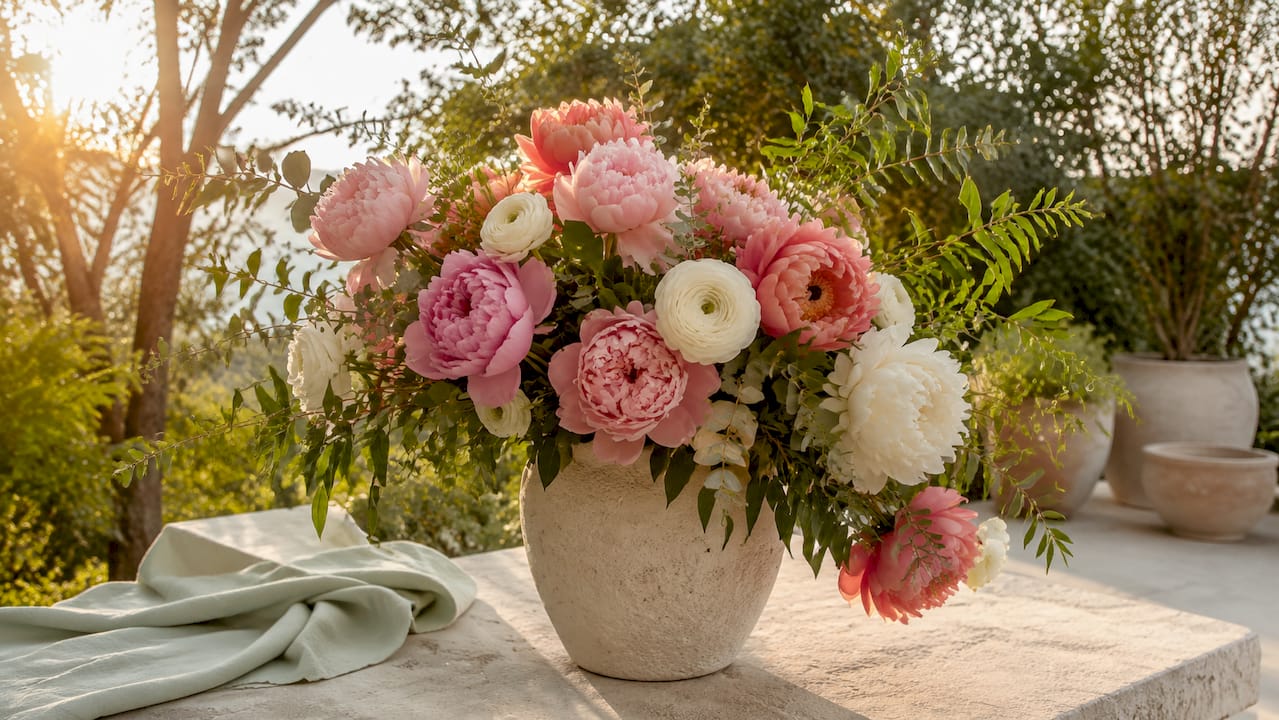
Statement arrangements rely on dramatic scale and volume, often reaching two to three feet tall or several feet wide. That scale demands the right bloom types from the start. Focal flowers carry the visual weight. Think large-headed roses, peonies, dahlias, and sunflowers. These are your anchors. Linear stems such as delphiniums, snapdragons, and tall eucalyptus branches add height and movement. Filler flowers like waxflower, gypsophila, and limonium soften the composition and add texture.
Containers and structural support
Your vase or container shapes the entire arrangement. Wide-mouthed vessels suit lush, garden-style designs. Tall, narrow cylinders work for vertical, architectural looks. Stability comes from a hashtag grid made by layering professional floral tape across the vase opening in a criss-cross pattern. Crumpled chicken wire placed inside the vessel achieves the same result. Both methods hold stems at precise angles without dense floral foam, which can restrict water flow and shorten vase life.
Tools you need
- Sharp floral shears or secateurs (blunt blades crush stems and reduce water uptake)
- A clean bucket for stem conditioning and hydration
- Floral tape and waterproof tape for grid construction
- A spray bottle for misting delicate petals
- Ribbon, twine, or raffia for finishing and wrapping
Pro Tip: Keep a teaspoon to hand when working with narrow-necked vases. Rest it across the opening with its bowl facing up, and use it to guide stems to the exact angle you want without them clustering at the centre.
How do you select and prepare flowers for a statement arrangement?
Choosing the right flowers is as much about meaning and season as it is about appearance. A well-chosen bloom communicates something specific.
Step 1: Choose your focal flowers
Pick two or three focal flower varieties that share a colour story. A single dominant hue creates a powerful mono-flower effect. Fifty roses or thirty peonies massed together read as luxury and intention. Mixing two complementary tones, such as blush and burgundy, adds depth without losing cohesion.
Step 2: Apply the varied length rule
Cutting around 20% of your stems 1–2 inches shorter and placing them around the vase rim prevents the flat, top-heavy “poof” effect. This technique creates multi-dimensionality. Your arrangement gains layers, and the eye travels through it rather than stopping at a single flat plane.
Step 3: Condition your stems properly
Cut stems at a 45-degree angle underwater to prevent air embolism, which blocks water uptake and causes premature wilting. Many gift buyers skip this step and wonder why flowers fade quickly. Fill a clean bucket with cool water, submerge the stem ends, and cut cleanly. Leave flowers to hydrate for at least two hours before arranging.
Step 4: Consider seasonality
Seasonal flowers are fresher, last longer, and cost less. In spring, tulips, ranunculus, and peonies are at their peak. Summer brings dahlias, sweet peas, and sunflowers. Autumn offers chrysanthemums, celosias, and rich-toned roses. Winter suits amaryllis, hellebores, and eucalyptus. Choosing in-season blooms also gives your gift an authentic, timely quality that out-of-season imports rarely match.
Pro Tip: Designer’s choice arrangements that adapt to the freshest stems available that day often produce the most memorable and authentic gifts. Ask your florist what arrived that morning rather than insisting on a fixed list.
What is the step-by-step process to arrange flowers for a statement gift?
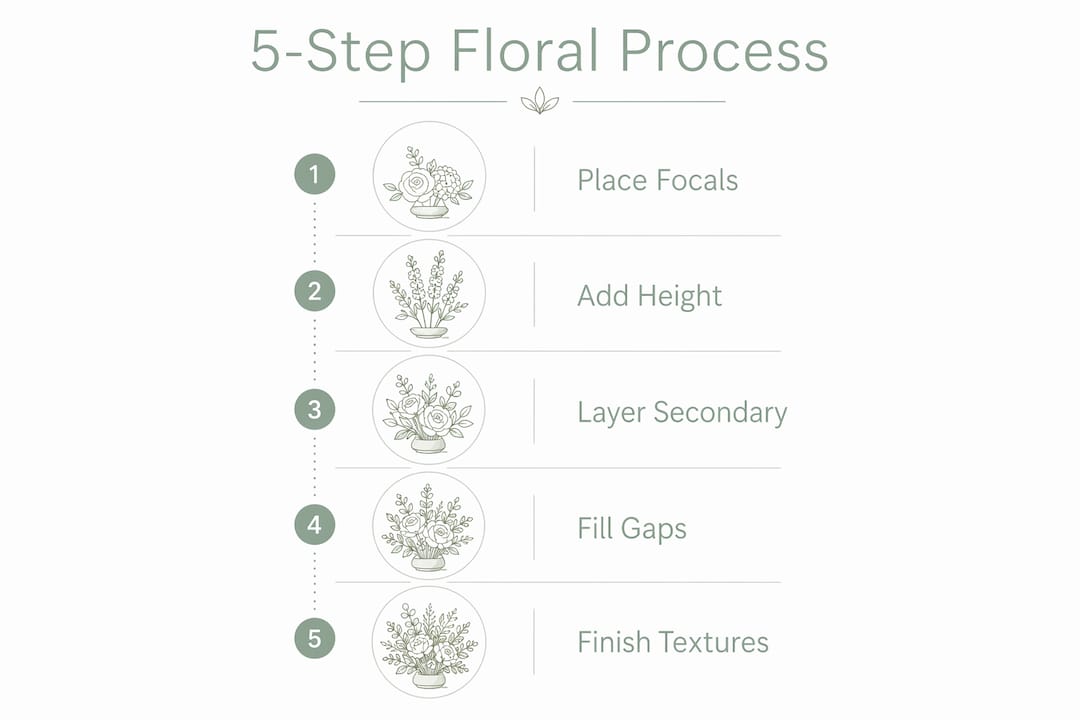
Professional florists follow a 5-step hierarchy to build balanced yet dramatic arrangements. Following this sequence prevents the most common structural mistakes.
Step 1: Place your focal flowers first
Set your largest blooms into the grid at varying heights. These are your anchors. Space them evenly so no single side feels heavier than another. Odd numbers, three, five, or seven blooms, create more natural balance than even groupings.
Step 2: Add linear stems for height and movement
Insert tall, upright stems such as delphiniums or snapdragons to establish the arrangement’s maximum height. Angle some stems outward slightly. This prevents a rigid, column-like silhouette and gives the composition a sense of energy.
Step 3: Layer in secondary blooms
Secondary flowers fill the space between focal blooms. Spray roses, lisianthus, and ranunculus work well here. Place them at different depths, some sitting higher, some tucked lower, to build visual complexity.
Step 4: Fill gaps with spray flowers
Spray flowers carry multiple blooms on a single stem. They conceal the tape grid, chicken wire, or any visible mechanics. Gypsophila and waxflower are particularly effective for this. They also soften hard edges and add an organic, airy quality that distinguishes a luxury arrangement from a supermarket bunch.
Step 5: Add finishing textures
Trailing ivy, feathery ferns, or dried grasses add the final layer of interest. These elements catch light differently and give the arrangement movement. Step back and assess from all angles before finishing.
| Step | Element | Purpose |
|---|---|---|
| 1 | Focal flowers | Establish scale and visual anchors |
| 2 | Linear stems | Create height and directional movement |
| 3 | Secondary blooms | Add depth and colour complexity |
| 4 | Spray flowers | Conceal mechanics, soften edges |
| 5 | Textural details | Add finishing interest and movement |
Pro Tip: Rotate the vase a full 360 degrees after each step. Arrangements designed from every angle command presence in any space. A flat front-facing display looks impressive on a table but disappointing from the side.
What common mistakes should you avoid with your floral creation?
Even experienced gift buyers make the same errors. Knowing them in advance saves time and flowers.
- Uniform stem height. Placing all stems at the same level creates a flat, one-dimensional look. Use the varied length rule from the preparation stage and continue adjusting as you build.
- Overpacking the vase. Cramming too many stems together restricts water flow and causes blooms to press against each other, bruising petals. Leave breathing room between stems.
- Skipping hydration. Flowers that go straight from packaging into an arrangement without conditioning wilt within hours. Always hydrate for at least two hours first.
- Neglecting stem trimming. Trim stems by half an inch every two days and change the water. This single habit extends vase life significantly.
- Ignoring colour vibrancy. Direct sunlight and heat fade petals quickly. Display your finished gift away from radiators, windowsills in direct sun, and fruit bowls, which emit ethylene gas that accelerates ageing.
“The most common reason a homemade arrangement looks amateur is not the flowers chosen. It is the mechanics underneath. Sort the structure first, and the beauty follows.”
If your arrangement looks unbalanced after completion, remove the secondary and filler flowers first. Reassess the focal flower placement before rebuilding. Resist the urge to add more flowers to fix a structural problem. Subtraction is almost always the better solution.
Key takeaways
Creating statement floral gifts requires the right materials, a structured 5-step building method, and careful flower preparation to produce arrangements that are genuinely memorable.
| Point | Details |
|---|---|
| Scale defines impact | Use large focal blooms in volume, such as 30 peonies or 50 roses, to create a high-impact mono-flower effect. |
| Structure before beauty | Build a tape or chicken wire grid in your vase before adding a single stem to hold everything in place. |
| Varied lengths add depth | Cut 20% of stems 1–2 inches shorter and place them at the vase rim to prevent flat, top-heavy arrangements. |
| Condition stems properly | Cut stems at a 45-degree angle underwater to stop air embolism and extend the life of your arrangement. |
| Assess from every angle | Rotate the vase 360 degrees at each stage to catch imbalances before they become permanent. |
Why statement flowers are about intention, not just size
I have been around flowers long enough to know that the most impressive arrangements are rarely the biggest ones. They are the most considered ones. The gift buyers who create something truly memorable are not the ones who buy the most stems. They are the ones who think about the person receiving the flowers before they choose a single bloom.
The artful techniques behind luxury floral design are learnable, but the intention behind them is personal. I always tell people: design for the recipient’s space, not your own taste. A dramatic vertical arrangement suits a hallway. A wide, low composition works on a dining table. Getting that right matters more than the flower variety.
Imperfection is also part of what makes handcrafted floral gifts special. A slightly asymmetric arrangement, a stem that leans outward, a trailing piece of ivy that was not planned. These are the details that signal a human hand made this. They are what separates a designer bouquet for a prestige occasion from something mass-produced. Embrace them.
— Steve
Blumeflowers: statement bouquets crafted for every occasion
When you want the impact of a statement arrangement without the preparation time, Blumeflowers offers a curated selection of premium bouquets built around the same design principles covered here.
The Beautifully Simple Peony Bouquet is a strong starting point for anyone seeking a bold, elegant gift. For a dramatic pink statement, the Showstopper Pink Bouquet delivers immediate visual impact. Every arrangement uses seasonal, fresh stems selected for quality and longevity. Blumeflowers offers same-day and next-day delivery across Birmingham, Solihull, and surrounding areas, so a last-minute occasion never means a compromised gift.
FAQ
What makes a floral gift a “statement” arrangement?
A statement arrangement is defined by dramatic scale, bold bloom choices, and intentional design. Arrangements often reach two to three feet tall and use large quantities of a single flower type for maximum visual impact.
How many flowers do I need for a statement bouquet?
Volume is key. Using 30 peonies or 50 roses in a single arrangement creates the high-impact mono-flower effect associated with luxury gifting. Supplement with linear stems and filler flowers to build structure around the focal blooms.
What is the best way to keep statement flowers fresh longer?
Cut stems at a 45-degree angle underwater, change the water every two days, and trim stems by half an inch each time. Keep the arrangement away from direct sunlight, heat sources, and fruit bowls.
Do I need floral foam to make a statement arrangement?
Floral foam is not necessary. A hashtag grid made from floral tape across the vase opening, or crumpled chicken wire inside the vessel, provides equal or better structural support while allowing water to circulate freely around the stems.
Which flowers work best for bold, unique floral arrangements?
Large-headed focal flowers such as peonies, dahlias, and garden roses create the most impact. Pair them with tall linear stems like delphiniums for height, and soften the composition with gypsophila or waxflower for an airy, finished look.