


What is a floral centrepiece: your complete guide
TL;DR:
- A floral centrepiece creates visual focus, sets the mood, and enhances a room’s overall design. Proper scale, colour harmony, and vessel choice are essential to ensure balance and impact, tailored to the occasion and venue. Mastering these principles allows for timeless, effective arrangements that elevate any event or space.
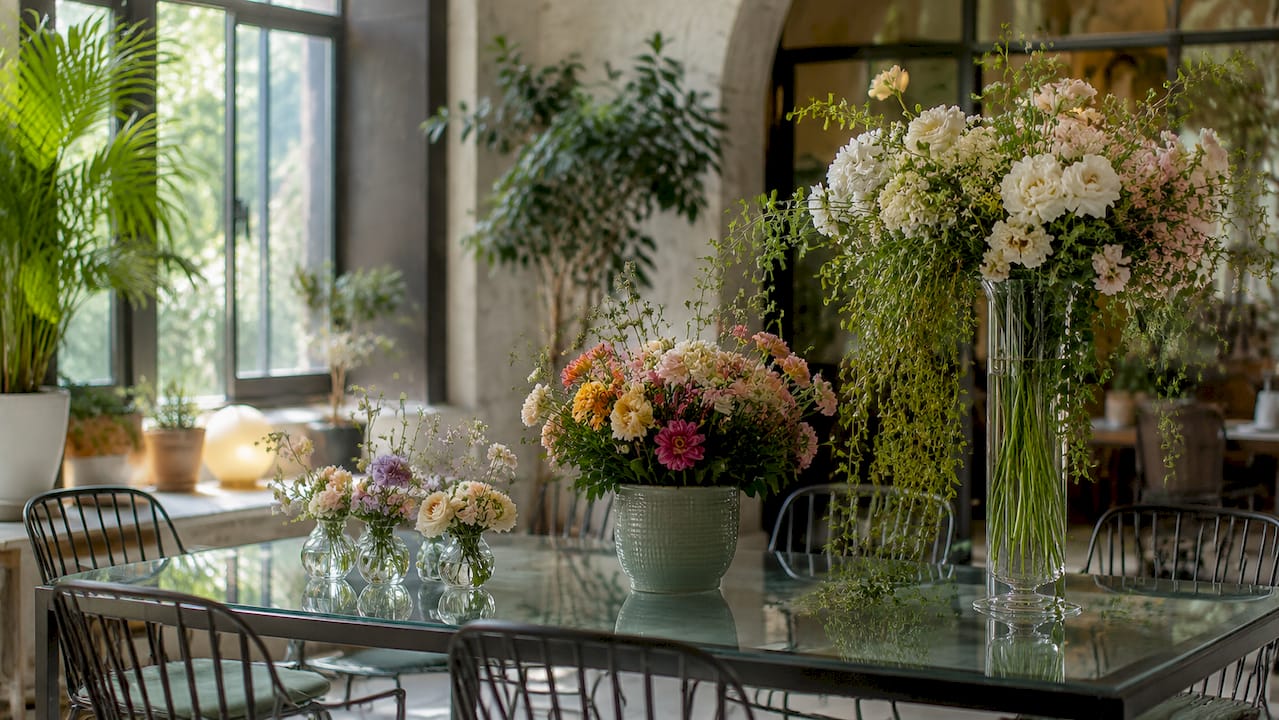
A floral centrepiece is a purposeful arrangement of flowers placed at the centre of a table or space to create visual focus, set the mood, and tie a room’s design together. Professional florists refer to these as table arrangements or focal arrangements, though “floral centrepiece” is the term most widely used by event planners and home decorators alike. Whether you are planning a wedding reception, a corporate dinner, or simply refreshing your dining table, the centrepiece is the single design element that guests notice first and remember longest. This guide covers every aspect, from popular centrepiece styles to DIY creation, so you can make confident decisions.
What is a floral centrepiece and why does it matter?
A floral centrepiece sets the mood, anchors the table, and ties the room’s colour palette together, making it far more than a decorative afterthought. It is the visual anchor of any table setting, drawing the eye and establishing the tone before a single word is spoken or a dish is served.
In event design, centrepieces serve a structural purpose. They define the rhythm of a room. A well-placed arrangement tells guests where to look, signals the formality of the occasion, and reinforces the colour story running through linens, lighting, and stationery. At home, a centrepiece on a dining or console table performs the same function at a smaller scale, giving a room a finished, considered quality.
The occasions that call for a centrepiece are broad. Weddings, anniversary dinners, corporate galas, garden parties, and Christmas tables all benefit from a considered floral focal point. Even a simple Sunday lunch feels more deliberate with a small arrangement of seasonal blooms at the centre of the table.
What are the main types of floral centrepiece?
Floral centrepieces fall into several distinct styles, each with its own visual character, price point, and ideal setting. Understanding the differences helps you match the right style to your occasion and budget.
- Bud vase trios: Three or more small vases grouped together, each holding one or two stems. Relaxed, modern, and budget-friendly.
- Low lush arrangements: Wide, full arrangements kept below 30 centimetres. Ideal for intimate dinners where conversation matters.
- Compote arrangements: Flowers arranged in a footed bowl or dish, creating a soft, garden-style look at mid height.
- Tall elevated arrangements: Flowers mounted on tall structures or pedestals, with the floral mass starting above seated eye level. Dramatic and suited to grand venues.
- Garland runners: Loose trails of flowers and greenery laid along the length of a table. Popular for long banquet settings.
- Floating candle and flower bowls: Flower heads and candles floating in water-filled vessels. Romantic and low-cost.
- Single-stem designs: One statement bloom per vessel, repeated across a table. Minimal, architectural, and striking.
Wedding centrepiece costs range from £25–£40 for bud vase trios to £120–£320 or more for tall elevated arrangements. That price gap reflects the structural complexity, specialist labour, and volume of premium blooms required for taller pieces.
Mixing two or three different styles across reception tables delivers better visual variety and financial value than committing to a single uniform design throughout. A practical approach is to use tall arrangements on every third table and low lush designs elsewhere.
| Style | Height | Relative cost | Best use |
|---|---|---|---|
| Bud vase trio | Under 20 cm | Low | Casual dinners, garden parties |
| Low lush arrangement | Under 30 cm | Medium | Weddings, home dining |
| Compote arrangement | 25–40 cm | Medium | Garden weddings, brunches |
| Tall elevated arrangement | 80 cm and above | High | Ballrooms, gala dinners |
| Garland runner | Flat | Low to medium | Long banquet tables |
| Floating candle bowl | Under 15 cm | Low | Romantic dinners, receptions |
Pro Tip: When working with a tight budget, choose one tall arrangement for the top table and use bud vase trios everywhere else. The contrast reads as intentional rather than economical.
How do design principles shape a centrepiece’s impact?
Scale is the most misunderstood principle in centrepiece design. Low-profile arrangements should stay under 12 inches (30 centimetres) to preserve guest sightlines, while tall arrangements must clear seated eye level entirely. Any arrangement that sits at face height blocks conversation and creates discomfort.
Colour harmony is the second critical principle. A centrepiece that pulls two or three colours from the room’s existing palette, such as the linen, the tableware, or the venue’s walls, creates cohesion rather than competition. Repeating the same colour across multiple arrangements reinforces the effect and makes the whole room feel designed rather than assembled.
Negative space is a principle that separates amateur arrangements from professional ones. Florists use a focal flower surrounded by smaller supporting blooms to create intentional gaps in the arrangement. Those gaps give the eye somewhere to rest and make the focal flower read more powerfully. Packing a vase to capacity produces a busy, undifferentiated result.
Venue features must inform every decision. High-ceiling ballrooms suit tall elevated pieces; outdoor or garden settings call for low, stable designs that will not topple in a breeze. Round tables suit circular, symmetrical arrangements. Long rectangular tables benefit from repeated smaller pieces rather than one large centrepiece at the midpoint.
Pro Tip: Before finalising your design, sit at the table and look across it at seated height. If you cannot see the person opposite, the arrangement is too tall or too wide.
Which flowers and vessels work best?
Flower selection follows a simple three-tier structure used by professional florists: focal flowers, secondary flowers, and greenery. Focal flowers are large, high-impact blooms such as peonies, garden roses, dahlias, or hydrangeas. Secondary flowers fill the gaps and add texture. Think ranunculus, lisianthus, or spray roses. Greenery, including eucalyptus, ruscus, or fern, adds depth and frames the arrangement.
Seasonal availability is the most reliable guide to both quality and cost. Peonies peak in late spring and early summer. Dahlias are at their best from late summer through autumn. Tulips and narcissi define spring. Choosing flowers in season means better condition, stronger colour, and lower cost per stem. You can explore current luxury floral trends to see which seasonal blooms are most popular right now.
Vessel choice shapes the entire character of an arrangement. The vessel directly influences final pricing, complexity, and aesthetics, with tall structures requiring specialist labour and often rental fees. A simple glass cylinder vase keeps costs low and suits modern or minimal styling. A ceramic bud vase adds warmth and texture for rustic or organic designs. Compote dishes and candelabras suit formal or heritage settings but require more skilled assembly.
On the question of fresh versus artificial flowers: fresh blooms remain the standard for events where photography, fragrance, and emotional impact matter. Artificial arrangements suit permanent home installations where longevity outweighs the sensory experience of fresh flowers.
How to create a floral centrepiece: step-by-step
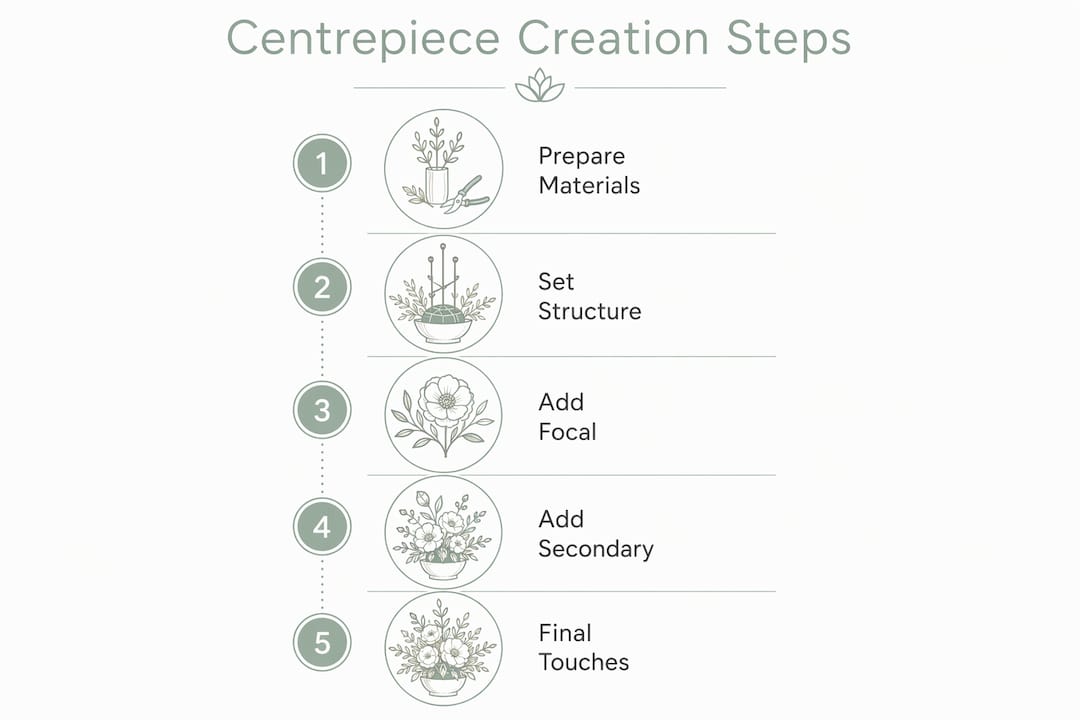
Creating your own centrepiece is achievable with the right preparation. The process follows a clear sequence that professional florists use regardless of scale or budget.
What you will need:
Floral foam or a clean vase, sharp floral scissors or secateurs, your chosen flowers and greenery, a waterproof vessel, and floral tape or a frog pin holder for stability.
Step 1: Prepare your materials
Soak floral foam thoroughly before placing stems into it. Dry or partially soaked foam causes premature wilting, which is the most common DIY mistake. Place the foam in a bowl of water and allow it to sink naturally rather than forcing it under.
Step 2: Establish your structure
Cut your greenery to the desired height and insert it first to define the shape and scale of the arrangement. Greenery creates the framework that all other stems will follow.
Step 3: Place your focal flowers
Insert your focal blooms at even intervals across the arrangement. Odd numbers, three or five focal flowers, read more naturally than even numbers. Vary the stem height slightly to avoid a flat, uniform surface.
Step 4: Add secondary flowers
Fill the gaps between focal flowers with your secondary blooms. These should sit slightly lower than the focal flowers to create depth. Step back regularly and assess the arrangement from all angles, not just the front.
Step 5: Final checks and hydration
Trim any stems that protrude awkwardly and add water to the vessel or foam. For a step-by-step guide to luxury arrangements, Blumeflowers offers detailed professional guidance on achieving a polished result.
Pro Tip: The florist technique prioritises focal flowers and controlled negative space over maximum vase fill. Resist the urge to add more stems once the arrangement looks balanced.
Floral centrepiece ideas for different occasions
The right centrepiece style depends on the occasion, the venue, and the guests. Here are practical starting points for the most common settings.
- Weddings: Low lush arrangements in soft whites, blush, and sage suit intimate ceremonies. Grand ballrooms call for tall elevated pieces in ivory and gold. Choosing centrepiece style based on table shape and guest count improves both conversation flow and the overall atmosphere.
- Corporate events: Clean, architectural arrangements in the company’s brand colours reinforce identity. Single-stem designs in uniform vessels work well for conference tables. Blumeflowers offers corporate flower arrangements tailored specifically for professional settings.
- Garden parties: Loose, wildflower-style arrangements in terracotta pots or enamel jugs suit outdoor settings. Keep heights low for stability in open-air conditions.
- Home dining tables: A single compote arrangement or a trio of bud vases with seasonal blooms refreshes a dining room without overwhelming the space.
- Long banquet tables: Repeating multiple smaller arrangements down the length of a banquet table improves visibility and photographic balance far more effectively than one large central piece.
For wedding floral inspiration that connects floral design to broader event styling, it is worth considering how centrepieces interact with other decorative elements such as stationery, lighting, and table linen.
Key takeaways
A floral centrepiece works best when scale, colour, vessel choice, and occasion are considered together rather than treated as separate decisions.
| Point | Details |
|---|---|
| Scale determines comfort | Keep low arrangements under 30 cm and tall ones above seated eye level to protect sightlines. |
| Style affects cost significantly | Bud vase trios cost a fraction of tall elevated arrangements; mixing styles balances budget and impact. |
| Vessel choice shapes the design | The container influences labour complexity, cost, and the overall aesthetic of the arrangement. |
| Focal flowers need space | Use one high-impact bloom with controlled negative space rather than filling the vase to capacity. |
| Match style to venue and occasion | Ballrooms suit tall dramatic pieces; outdoor settings and intimate dinners call for low, stable designs. |
Why centrepieces are worth getting right
I have spent years watching people underestimate the centrepiece. They finalise the venue, the catering, the lighting, and then treat the flowers as a last-minute detail. That is the wrong order of priorities.
A centrepiece is the one element every guest interacts with for the entire duration of an event. They look at it while they eat, while they talk, while they wait. A poorly scaled arrangement that blocks sightlines creates low-level frustration that guests cannot always name but definitely feel. A beautiful, well-proportioned arrangement does the opposite. It relaxes people. It makes the table feel like a place worth being.
The most common mistake I see from first-time arrangers is over-filling the vessel. More flowers does not mean more impact. The florist’s instinct is to create space, to let the focal bloom breathe, and to trust that restraint reads as confidence. That principle applies whether you are arranging a single bud vase for your kitchen table or briefing a florist on a 200-person wedding.
Trends come and go. Dried flowers, pampas grass, and maximalist arrangements have all had their moment. But the design principles that make a centrepiece work, scale, colour harmony, focal point, and negative space, are timeless. Master those, and you can execute any style with authority. If you want to see where current trends are heading, the 2026 floral trends guide from Blumeflowers is a useful reference point.
— Steve
Discover premium centrepieces and bouquets from Blumeflowers
If you want the impact of a professional centrepiece without the DIY effort, Blumeflowers offers a curated selection of luxury arrangements suited to every occasion.
The Beautifully Simple Peony Bouquet is a standout choice for table centrepieces, with its full, garden-style blooms translating beautifully from gift to event décor. For spring gatherings, the Tulip Bouquet brings clean colour and elegant simplicity to any table setting. Blumeflowers delivers across Birmingham, Solihull, and surrounding areas, with same-day and next-day options available. Whether you are planning a wedding, a corporate event, or a special dinner at home, the team at Blumeflowers can help you find the right arrangement for your setting.
FAQ
What is the standard height for a floral centrepiece?
Low centrepieces should stay under 30 centimetres to preserve guest sightlines, while tall arrangements must clear seated eye level entirely. Any arrangement that sits at face height blocks conversation across the table.
How much does a floral centrepiece cost?
Costs vary widely by style. Bud vase trios typically start at around £25–£40, while tall elevated arrangements can reach £120–£320 or more depending on the flowers and structural complexity involved.
Can I make a floral centrepiece myself?
Yes. The key steps are soaking your floral foam fully, placing greenery first to set the structure, then adding focal flowers at odd-numbered intervals before filling with secondary blooms. Avoid over-filling the vessel for the best result.
Which flowers are best for a centrepiece?
Peonies, garden roses, dahlias, and hydrangeas make strong focal flowers due to their size and visual impact. Pair them with ranunculus or lisianthus as secondary blooms and eucalyptus or ruscus for greenery.
How do I choose the right centrepiece style for my venue?
High-ceiling ballrooms suit tall elevated arrangements, while outdoor or garden venues require low, stable designs. Round tables work well with circular arrangements, and long banquet tables benefit from repeated smaller pieces rather than one large central display.