


Explaining luxury floral trends for stylish occasions
TL;DR:
- Floral design in 2026 prioritizes permanence, intentional artistry, and materials that endure, moving away from temporary arrangements. Modern luxury emphasizes preserved botanicals, natural depth, and minimalist asymmetry, creating lasting and meaningful floral expressions. Skilled techniques and strategic venue considerations shape impactful, restrained arrangements that reflect contemporary elegance and sustainability.
Floral design has quietly undergone one of its most significant transformations in decades, and if you are still picturing luxury arrangements as towering, tightly packed fresh blooms swapped out weekly, you are working from an outdated script. Explaining luxury floral trends in 2026 means understanding a fundamental shift: the finest floral expressions are now defined by permanence, intentional artistry, and materials chosen to endure. For Birmingham’s most discerning clients, whether you are commissioning arrangements for a flagship corporate reception or planning a landmark celebration, knowing what actually defines modern luxury florals shapes every decision you make.
Table of Contents
- The new luxury: permanence and natural depth in floral design
- Top luxury floral trends defining style and substance in 2026
- Choosing floral centrepieces that reflect contemporary luxury and venue aesthetics
- Expert floral design techniques for impactful tablescapes
- Why restraint and permanence trump abundance in modern luxury floristry
- Explore bespoke luxury floral arrangements with Blüme Flowers
- Frequently asked questions
Key Takeaways
| Point | Details |
|---|---|
| Shift to permanence | Luxury florals now prioritise lasting presence over weekly fresh flower changes. |
| Preserved elegance | Preserved and dried botanicals have become a high-end design staple for their longevity and texture. |
| Bold trends | 2026 trends embrace fearless designs focusing on movement, texture, and architectural scale. |
| Smart styling | Mixing floral centrepiece styles balances budget and dramatic impact appropriate to venue. |
| Expert tablescaping | Limiting colours and using natural elements create powerful, sophisticated table displays. |
The new luxury: permanence and natural depth in floral design
The single biggest shift in luxury floristry right now is the move away from treating flowers as temporary decoration. For decades, prestige was measured in fresh stems replaced on a weekly rota. Today, the most forward-thinking floral designers in the UK are building arrangements meant to last months, sometimes years, without losing their integrity or beauty.
Flower trends in 2026 favour preserved arrangements over weekly fresh rotations, aligning directly with biophilic design principles and sustainability values. Biophilic design, in simple terms, is the practice of weaving natural elements into built environments to sustain a felt connection to the natural world. When your office lobby or home entrance features preserved botanicals rather than wilting fresh stems, that connection becomes continuous rather than periodic.
Preserved and dried botanicals have moved from craft-fair curiosity to genuinely coveted design objects. Think smoke-dried hydrangeas in deep burgundy, preserved pampas in pale gold, and dried proteas standing as sculptural centrepieces. These materials hold their form and colour for well over a year. For corporate clients in Birmingham commissioning receptions or boardroom installations, this matters enormously: a single investment lasts, requires no maintenance rota, and retains a polished presence throughout.
“The finest floral experiences are no longer measured by how many stems are in a vase, but by how long they hold meaning in the space.”
Understanding modern floral design principles helps clarify why this permanence-first thinking has taken hold. With this foundational change understood, let’s explore the specific trends that embody this new approach.
Top luxury floral trends defining style and substance in 2026
The eight biggest luxury floral trends shaping 2026 are not simply aesthetic preferences. Each one reflects a broader shift in how wealthy clients and design-conscious spaces want to relate to flowers:
- Biophilic design integration — Botanical elements woven into architecture and interiors as continuous fixtures, not occasional additions
- Preserved botanicals — Dried and preserved materials treated as permanent gallery-worthy objects rather than temporary accents
- Warm earth palettes — Terracotta, ochre, rust, and cognac tones replacing the cool whites and blush pinks that dominated the previous decade
- Mono-floral minimalism — A single bloom variety, perhaps anemones or garden roses, presented with extraordinary care in a clean vessel
- Architectural-scale statements — Installations at ceiling height or spanning entire walls, designed to command a room rather than sit within it
- Sustainable luxury — Locally sourced, ethically grown, zero-waste materials that allow prestige without environmental compromise
- Texture layering — Combining velvety blooms with rough seed pods, feathery grasses, and smooth sculptural foliage for tactile richness
- Flowers as permanent design elements — Treating arrangements as art objects with the same consideration given to furniture or lighting
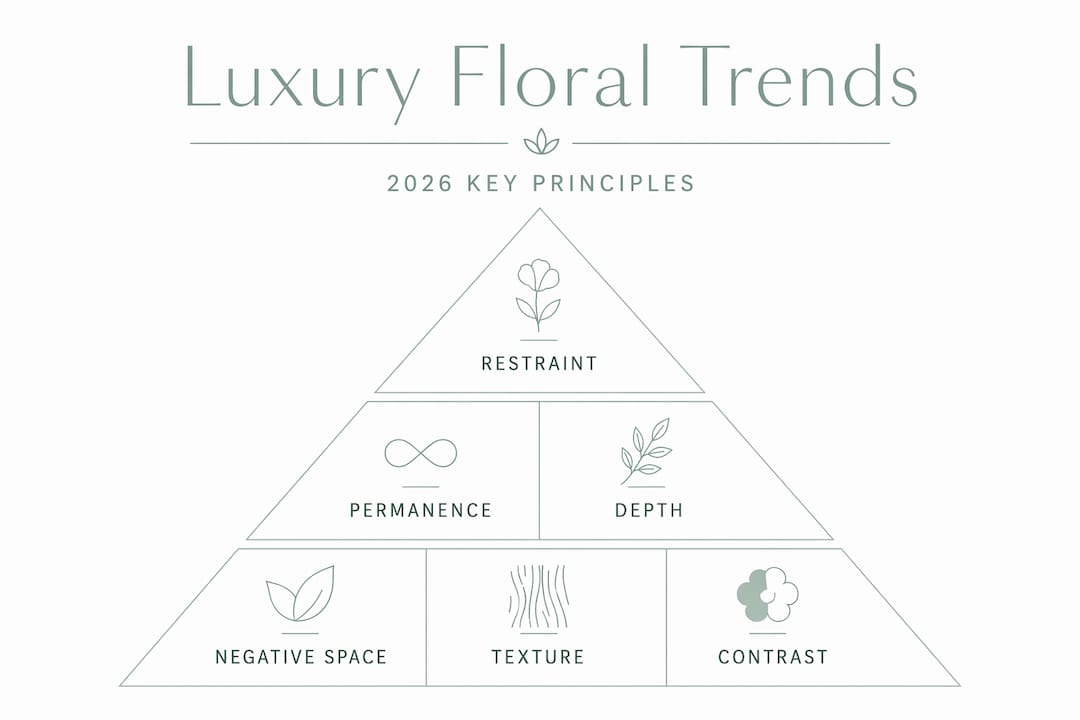
Bold floral design is increasingly defined by movement, colour tension, negative space, and contrast. The fearless approach means a single stem of black bat flower in a concrete vessel can outperform fifty roses in a crystal urn, if the intention is clear.
| Trend | Visual tone | Best suited for |
|---|---|---|
| Mono-floral minimalism | Clean, considered | Corporate boardrooms, private dining |
| Architectural installations | Dramatic, immersive | Event venues, hotel lobbies |
| Warm earth palettes | Grounded, sophisticated | Autumn weddings, luxury homes |
| Texture layering | Rich, tactile | Tablescapes, bespoke gifting |
| Preserved botanicals | Lasting, gallery-style | Office receptions, home interiors |
Pro Tip: If you are commissioning floral craftsmanship for a luxury occasion, request a mood board that references texture and negative space explicitly. It signals to your florist that you understand the difference between filling a space and designing within it.
Having outlined the defining trends, let’s examine how these concepts translate into specific arrangements that suit different occasions and venues.
Choosing floral centrepieces that reflect contemporary luxury and venue aesthetics
Not every trend translates directly into a centrepiece, and centrepiece selection is where many clients either elevate a space or inadvertently flatten it. Wedding centrepieces vary widely in style and price, and mixing formats is currently the favoured approach for both visual impact and budget management.
Here are the primary styles worth understanding:
- Bud vases — Small individual vessels grouped in threes or fives along a table runner. Low cost, high charm, particularly effective on long banquet tables
- Compotes — Wide, shallow bowls on short stems, filled with low, lush blooms. Perfect for intimate round tables where guests need to see across
- Tall arrangements — Drama at eye level and above, typically on slender columns or tall vessels. Work best in high-ceilinged venues like Birmingham’s heritage function rooms
- Garlands — Flowing botanical runners along the length of a table, incorporating foliage, dried elements, and blooms at intervals
- Single statement stems — One large bloom, an anthurium or king protea, in a considered vessel. Understated and undeniably confident
| Style | Approximate cost per table | Impact level | Best venue type |
|---|---|---|---|
| Bud vases (trio) | £30 to £50 | Moderate | Intimate dining |
| Compote | £80 to £150 | High | Round-table banquets |
| Tall arrangement | £150 to £350 | Very high | Grand reception halls |
| Garland | £120 to £250 per metre | High | Long banquet tables |
| Single statement | £40 to £90 | Considered, minimal | Contemporary spaces |
Mixing styles across tables creates a curated, collected feel rather than the uniform look associated with standard event floristry. Pair tall arrangements on a few anchor tables with bud vases on the remaining tables to vary the rhythm without breaking visual coherence.
Pro Tip: Match the scale of your centrepiece to the ceiling height. A compact compote in a vaulted Victorian room reads as tentative. A tall architectural arrangement in a low-ceilinged contemporary dining space feels oppressive. Let the architecture guide the proportion.
Explore luxury bouquet types suited to events if you need guidance on which bloom varieties currently hold up best under warm event lighting.
Beyond style and cost, expert techniques elevate the overall impact significantly.
Expert floral design techniques for impactful tablescapes
A tablescape is the full visual composition of a set table, not simply the centrepiece in isolation. The finest tablescapes feel designed rather than decorated, and the difference is usually technique rather than budget.
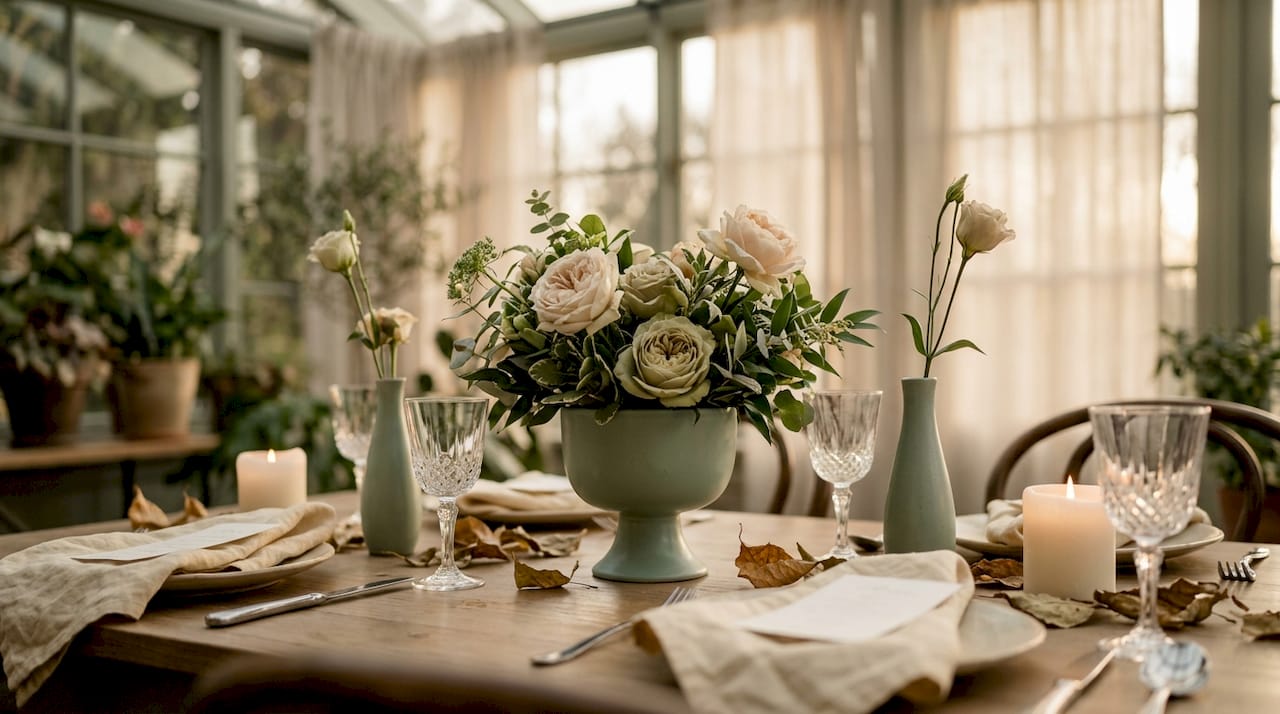
Simpler tablescapes using one or two colours, repeating patterns, and natural movement create stronger visual impact than arrangements packed with abundant, competing blooms. This is the most counter-intuitive truth in luxury floral design: more is almost always less.
Key techniques to apply:
- Limit your palette ruthlessly. One or two harmonious colours allow each bloom to read clearly. Terracotta and warm ivory. Blush and sage. Deep violet and dusty rose. Three or more colours tend to create visual noise rather than sophistication
- Build in natural movement. Grasses, branching foliage, and phototropic flowers (those that orient toward light) bring life to an arrangement. Bunny tail grass and feather reed grass add extraordinary movement without adding significant cost
- Use fillers with intention. Statice and solidago are workhorses of professional floristry: they add volume, texture, and colour without dominating. Used sparingly, they frame the hero blooms; used carelessly, they make an arrangement look casual
- Think about containers seriously. A concrete plinth, a tarnished brass urn, or a hand-thrown ceramic vessel signals design intelligence before a single bloom is placed. The container is not a backdrop; it is part of the composition
- Repeat, repeat, repeat. Repetition creates cohesion. Place the same element at regular intervals down a long table and the eye follows the rhythm naturally
Pro Tip: Introduce seasonal flower arrangements into your tablescape planning early. Choosing blooms at their seasonal peak ensures better quality, longer vase life, and lower cost per stem. It is the single most effective way to lift quality without increasing budget.
With design techniques understood, it is worth sharing a perspective that challenges some persistent assumptions in luxury floristry.
Why restraint and permanence trump abundance in modern luxury floristry
There is a persistent belief in the floral industry, and among clients who grew up with it, that luxury means abundance. More stems. Fuller arrangements. Overflowing vases. This belief is understandable. For most of the twentieth century, floral opulence was a genuine marker of wealth because volume was expensive.
But that logic has inverted. Today, a vase packed with fifty carnations costs less per stem than a thoughtfully assembled arrangement of three garden roses, two stems of sweet peas, and a single curve of sculptural foliage placed in asymmetric tension with each other. Modern luxury floristry now favours asymmetry and negative space over dense symmetry, because asymmetry creates dynamism and life where symmetry creates stillness.
Negative space in floristry works exactly as it does in fine art: the absence of material is as considered as its presence. A single dramatic orchid stem positioned off-centre in a tall vessel communicates confidence. It says the designer was not afraid to leave space unfilled, because they understood the space itself has value.
Preserved and dried flowers have shifted decisively to gallery-worthy luxury, treated as permanent design elements rather than temporary accents. For Birmingham’s corporate clients especially, this permanence is not simply aesthetic. It is practical. An architectural dried arrangement in a reception area requires no water, no maintenance rota, and no weekly replacement cost. It simply exists, beautifully, for the duration of its placement.
The emotional resonance of restraint is also worth noting. A single stem of garden rose left with intention, placed carefully in someone’s office or home, carries more weight than an enormous generic arrangement that fills a surface but says nothing particular. Consider how bouquets influence mood and space before defaulting to volume as your measure of generosity.
Embracing this perspective prepares you to commission floral arrangements that genuinely reflect your aesthetic values rather than simply signalling expenditure.
Explore bespoke luxury floral arrangements with Blüme Flowers
Now that you understand what luxury floral trends actually mean in practice, Blüme Flowers is positioned to bring those ideas to life for you in Birmingham and across the surrounding region.
Whether you are looking for a statement peony bouquet for a personal occasion, an elegant tulip arrangement for gifting, or a considered corporate flowers programme for your office or reception, Blüme combines ethical sourcing, bespoke craftsmanship, and same-day or next-day delivery across Birmingham and Solihull. Add luxury gift companions such as artisan chocolates or hand-poured candles to complete the presentation. If you have a specific occasion, venue, or brief in mind, a personalised consultation with the Blüme team will ensure your arrangement reflects the current floral trends and your own distinct taste.
Frequently asked questions
What defines a luxury floral arrangement in 2026?
Luxury floral arrangements combine premium bloom quality, ethical sourcing, skilled craftsmanship, and thoughtful design details chosen for lasting impact. Prestige is no longer measured in volume alone.
Why are preserved flowers popular in high-end floral design?
Preserved and dried flowers have shifted to gallery-worthy status, offering permanence, sustainability, and an aesthetic that aligns with the modern luxury value of lasting botanical presence over weekly replacements.
How should I choose floral centrepieces for different venues?
Consider ceiling height, table shape, and the scale of the room first, then mix formats such as bud vases, compotes, and tall arrangements to create visual variety and budget balance across the space.
What floral design techniques create the strongest tablescapes?
Limiting your palette to one or two colours, using repeating patterns, incorporating natural movement through grasses, and choosing considered containers consistently produces stronger visual results than maximising bloom quantity.