


Floral arrangements guide 2026: plan any occasion
TL;DR:
- Proper conditioning, reliable support systems, and layered tonal palettes define successful floral arrangements in 2026.
- Using the 3-5-8 rule and planning seasonal UK blooms ensures fresh, balanced, and long-lasting displays.
Floral arrangement is the art of combining flowers, foliage, and structural supports to create balanced, beautiful displays for any special occasion. Whether you are planning a wedding in July, a corporate dinner in September, or a milestone birthday celebration, the flowers you choose and how you place them will define the atmosphere of the room. This floral arrangements guide 2026 covers everything from conditioning stems and applying the 3-5-8 rule to selecting UK seasonal blooms and working with the colour palettes that professional florists are using right now. Mastering these techniques does not require years of training. It requires the right method, the right tools, and a clear plan.
What does the floral arrangements guide 2026 cover?
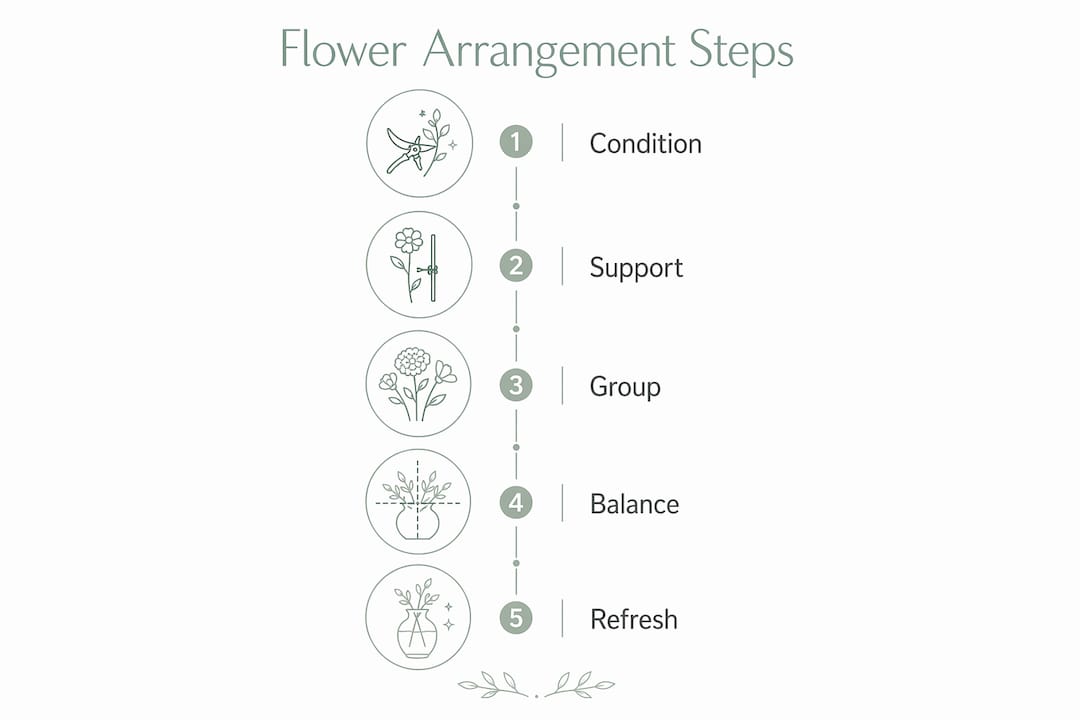
The standard industry term for what most people call “flower arranging” is floral design. It encompasses not just the placement of blooms but the structural mechanics, colour theory, and seasonal sourcing that make an arrangement last and look intentional. The core tools you need before you start are sharp floral shears, clear floral tape, a conditioning bucket, and a clean vase. Without these four items, even the most beautiful flowers will underperform.
Preparation is where most home arrangers lose time and results. Trimming stems at a 45° angle, removing submerged leaves, and conditioning flowers in cool water for 30 minutes before arranging extends vase life by 3–4 days. That difference matters enormously when you are preparing flowers for a multi-day event. The invisible steps of conditioning are what separate a display that looks fresh on day three from one that wilts by the morning after.
What tools and prep steps do you actually need?
Getting your materials right before you touch a single stem is the single most important decision in floral design. Here is what you need and why each item earns its place.
Essential tools and materials:
- Sharp floral shears or secateurs: Blunt blades crush stem cells and block water uptake. Replace or sharpen them before each major arrangement session.
- Clear floral tape: Used to create a grid across the vase opening for stem control.
- A clean conditioning bucket: Fill with cool water. Warm water accelerates bacterial growth and shortens vase life.
- Floral foam or a pin frog: For wider vessels where tape grids are impractical.
- A clean vase: Residue from previous arrangements harbours bacteria. Wash with diluted bleach and rinse thoroughly.
Preparation steps:
- Fill your conditioning bucket with cool, clean water.
- Trim every stem 2–3 cm above the existing cut, at a 45° angle, using sharp shears.
- Strip all leaves that would sit below the waterline. Submerged foliage rots quickly and clouds the water.
- Place stems in the bucket and leave for at least 30 minutes before arranging.
Vase sizing matters more than most people realise. The vase height should be roughly one third of the total bouquet height. A vase that is too tall crowds the stems and prevents natural spreading. A vase that is too short offers no structural support and causes slumping.
Pro Tip: Change the water every two days and re-cut stems by 1 cm each time. This single habit adds more longevity to an arrangement than any commercial flower food.
How do you arrange flowers like a professional florist?
The most reliable method for achieving a florist-quality result at home is the floral tape grid technique. Place two strips of clear tape in a hash pattern across the vase opening, then run one strip around the rim to lock the grid. This creates 6–9 small openings that hold each stem at the angle you choose. For wider vases, a pin frog placed at the base works better than tape. Many home arrangers struggle not because of poor taste but because of stem mechanics. The grid solves that problem entirely.
Once your support system is in place, apply the 3-5-8 rule from Country Living UK:
- Place 3 focal flowers first. Use large, statement blooms such as peonies, hydrangeas, or garden roses. Position them at varied heights and angles, not flat across the top of the vase.
- Add 5 stems of greenery. Use mixed textures: eucalyptus for softness, ruscus for structure, and fern for movement. Greenery at varied heights adds real depth rather than simply filling gaps.
- Fill with 8 filler flowers. Waxflower, gypsophila, or spray roses work well. Distribute them evenly to build symmetry and close any visual gaps.
Pro Tip: Always work in odd numbers when grouping stems of the same variety. Odd groupings read as natural to the eye; even groupings look arranged in the wrong sense of the word.
| Technique | Best For | Skill Level |
|---|---|---|
| Floral tape grid | Narrow to medium vases, tall stems | Beginner |
| Pin frog | Wide, low vessels, heavy stems | Beginner to intermediate |
| Floral foam block | Large centrepieces, complex shapes | Intermediate |
| Hand-tied spiral method | Bouquets before placing in a vase | Intermediate to advanced |
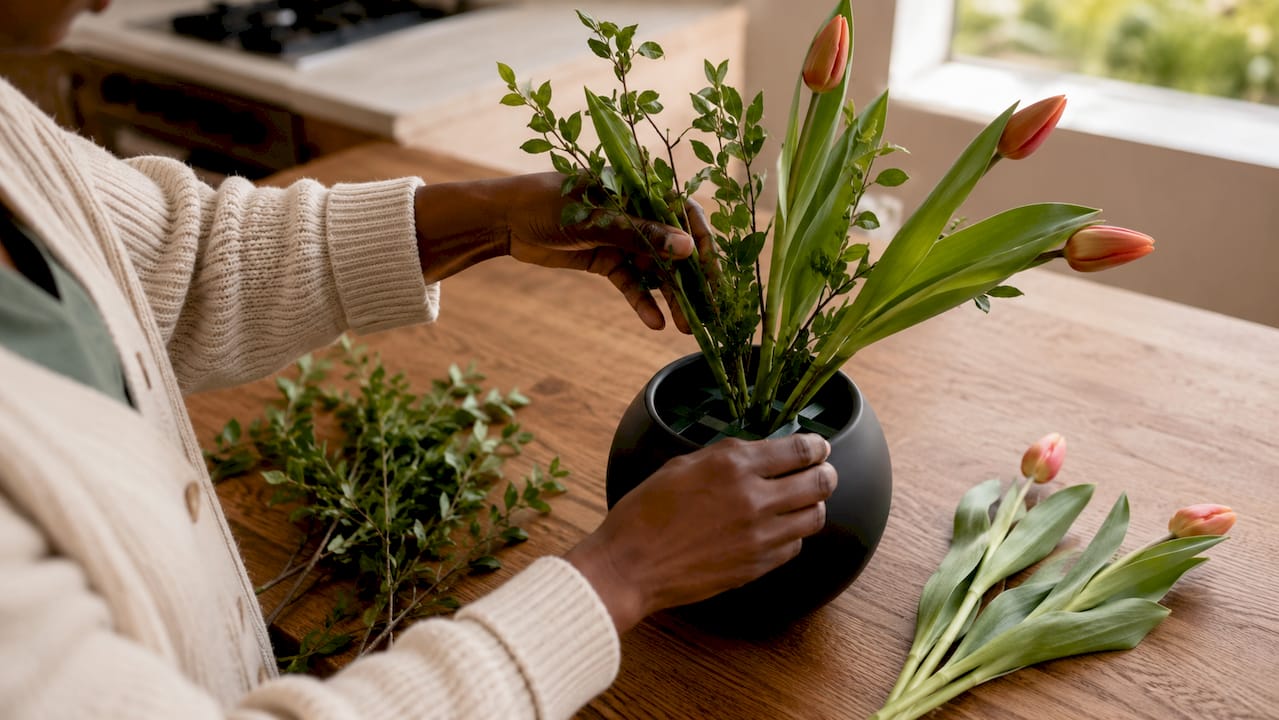
Avoid placing stems at identical heights. A flat arrangement reads as amateur regardless of the flowers used. Vary stem lengths by at least 5–8 cm between your shortest and tallest bloom to create the triangular silhouette that professional florists use as their default structure.
Which colour palettes are trending for 2026 floral designs?
2026 floral colour trends favour layered, tonal palettes over perfectly coordinated colour matching. The shift is significant. Florists now treat colour as a layered problem rather than a matching exercise, and the results look far more natural and collected. You can explore how this plays out in luxury floral styling for special occasions.
The five foundation colours driving 2026 arrangements are soft blush, warm cream, muted sage, dusty blue, and pale butter yellow. These are not pastel in the traditional sense. They carry warmth and depth that allows them to sit together without competing.
2026 trending palettes:
- Soft Romantic: Blush, ivory, and pale peach. Works for weddings, anniversaries, and sympathy arrangements.
- Fresh Garden: Cream, sage, and white. Suits outdoor events and summer luncheons.
- Earthy Neutral: Warm taupe, terracotta, and dried wheat tones. Strong choice for autumn events from September onwards.
- Airy Coastal: Dusty blue, white, and soft grey. Ideal for corporate events and modern interiors.
- Moody Botanical: Deep burgundy, forest green, and plum. Reserved for evening events and formal dinners.
“Florists increasingly see colour palettes as layered tonal problems rather than strict matching exercises, resulting in more nuanced, collected, and natural designs in 2026.” — aFloral, Colour Theory for Floral Styling 2026
Natural light changes how these palettes read. Dusty blue looks sophisticated in daylight but can appear flat under warm artificial lighting. Test your chosen palette in the actual venue lighting before committing to a large order. Texture also amplifies colour. Velvet-petalled flowers like ranunculus absorb light and deepen a palette; waxy blooms like anthuriums reflect it and brighten the overall impression. You can find further colour inspiration through the work of Joanna Kustra, whose approach to layered floral colour palettes has influenced UK event styling considerably.
What are the best seasonal UK blooms for summer and autumn events?
Selecting flowers that are in season in the UK is the most reliable way to get fresh, long-lasting stems at a fair price. The seasonal blooms guide 2026 from Blumeflowers covers this in detail, but the table below gives you the core planning data.
| Flower | UK Season | Vase Life | Best Use |
|---|---|---|---|
| Dahlia | July–October | 5–7 days | Focal bloom, centrepieces |
| Sweet pea | June–September | 4–6 days | Filler, trailing arrangements |
| Delphinium | June–August | 7–10 days | Height and structure |
| Cosmos | July–October | 5–7 days | Airy filler, garden-style designs |
| Echinacea | July–September | 7–10 days | Textural focal or filler |
| Rose | June–October | 7–14 days | Focal bloom, all occasion types |
UK summer blooms like dahlias, sweet peas, and cosmos provide continuous colour from June through to October. Sweet peas offer the longest cutting season of any summer annual at roughly 10–14 weeks. Combining perennials such as echinacea with annuals like cosmos and planning succession planting can deliver up to 20 weeks of continuous colour from a single cutting garden.
Planning tips for event sourcing:
- Order stems 3–5 days before your event to allow conditioning time.
- Source dahlias from UK growers rather than imported stock for better vase life.
- For a cutting garden of just 3m x 2m, plant dahlias and sunflowers at the back, cosmos and zinnias in the middle, and cornflowers and ammi at the front for a continuous harvest.
- Check with your florist or supplier in april and may to confirm availability for summer event dates, as popular varieties sell out early.
How do you fix common problems and make arrangements last longer?
Most arrangement problems trace back to one of three causes: poor conditioning, inadequate stem support, or incorrect timing. Identifying which applies to your situation saves both flowers and money.
Common issues and solutions:
- Stem slumping: Almost always caused by a missing or weak support structure. Retrofit a tape grid or add a pin frog to the base of the vase.
- Wilting within 24 hours: Re-cut stems at a 45° angle and place in fresh, cool water immediately. Wilting this fast usually means the stems were not conditioned before arranging.
- Cloudy water: Remove all submerged leaves, clean the vase, and refill with fresh water. Add a drop of bleach or a commercial flower food sachet.
- Buds not opening: Peonies and garden roses require 5–7 days to open fully from bud stage. If you are arranging for a specific event date, buy them in bud 5–7 days before and keep them at room temperature.
- Petals browning at edges: Usually a sign of ethylene gas exposure. Keep arrangements away from fruit bowls, direct sunlight, and heating vents.
Fresh bouquets and centrepieces should be made 1–2 days before the event and refrigerated overnight if possible. This is standard practice for professional florists working on weddings and corporate events.
Pro Tip: For multi-day events, prepare a second set of stems in conditioning buckets on day one. Swap them into the arrangements on day two for a display that looks freshly made throughout.
Key takeaways
Successful floral arrangements in 2026 depend on proper conditioning, a reliable stem support system, and colour palettes built on tonal layering rather than exact matching.
| Point | Details |
|---|---|
| Condition stems before arranging | Trim at 45°, remove submerged leaves, and soak for 30 minutes to add 3–4 days of vase life. |
| Use a structural support | A floral tape grid or pin frog prevents slumping and gives you control over stem angles. |
| Apply the 3-5-8 rule | Three focal blooms, five greenery stems, and eight fillers create balanced, professional results. |
| Choose tonal colour palettes | Layer almost-matching hues rather than exact matches for a natural, collected look. |
| Plan seasonal sourcing early | Order UK summer stems 3–5 days ahead and allow bud-opening flowers like peonies 5–7 days to bloom. |
What i have learned after years of working with flowers
The shift I have noticed most clearly heading into 2026 is the move away from abundance for its own sake. A few years ago, the instinct was always to add more: more stems, more varieties, more volume. The arrangements that genuinely impress people now are the ones with intentional space. Smaller, refined designs that use negative space and clear line-work are what I see at the best events this year. That is a harder discipline than filling a vase to the brim, and it is worth practising.
The other thing I would say, having applied the tape grid technique across dozens of arrangements, is that it genuinely changes what is possible for someone without formal training. Before I used it consistently, I spent far too long fussing with stems that refused to stay where I placed them. The grid removes that frustration entirely. You can focus on the creative decisions because the mechanics are handled.
On colour: trust the tonal approach. Picking flowers that are almost the same colour but not quite creates something that looks considered rather than accidental. A soft blush peony next to a warm ivory ranunculus next to a pale cream spray rose reads as sophisticated in a way that a perfectly matched trio never quite does. Experiment with this on a small arrangement before your event and you will see the difference immediately.
— Steve
Bring your 2026 floral vision to life with Blumeflowers
Planning flowers for a special occasion takes time, skill, and the right starting point. Blumeflowers makes that starting point easy.
The Beautifully Simple Peony Bouquet from Blumeflowers is designed around exactly the soft, tonal palette that defines the best floral designs 2026 has to offer. Each bouquet is crafted by skilled local florists in Birmingham using seasonal, quality-sourced stems. Whether you need flowers for a wedding, a corporate event, or a meaningful gift, Blumeflowers offers same-day and next-day delivery across Birmingham and Solihull. For workplace displays and reception styling, the corporate flowers service handles everything from weekly arrangements to one-off event installations. Browse the full collection at Blumeflowers and find the arrangement that fits your occasion.
FAQ
What is the 3-5-8 rule in flower arranging?
The 3-5-8 rule means using three focal flowers, five greenery stems, and eight filler flowers to create a balanced, harmonious arrangement. Placing focal blooms at varied heights and angles gives the design depth and prevents a flat appearance.
How long before an event should i arrange fresh flowers?
Make bouquets and centrepieces 1–2 days before the event and refrigerate them overnight. For bud-opening flowers like peonies or garden roses, purchase them 5–7 days in advance to allow full bloom.
Which UK flowers are best for summer 2026 events?
Dahlias, roses, delphiniums, sweet peas, cosmos, and echinacea are all in season from June to October in the UK. Sweet peas offer the longest cutting season at 10–14 weeks, making them a reliable choice for summer events.
How do i stop my flower arrangement from slumping?
Create a floral tape grid across the vase opening using two strips in a hash pattern, secured with a strip around the rim. This holds each stem at the angle you choose and prevents the bouquet from collapsing inward.
What colour palettes are trending for floral arrangements in 2026?
The leading palettes for 2026 use tonal layering rather than exact colour matching. Popular combinations include soft blush with warm cream, dusty blue with white and grey, and earthy neutrals such as terracotta with dried wheat tones.