


Types of seasonal blooms: your 2026 selection guide
TL;DR:
- Choosing flowers in season ensures better freshness, fragrance, and lower costs for gardens and events.
- Layering bloom periods and selecting backup flowers guarantees continuous color and reliable arrangements throughout the year.
Knowing which types of seasonal blooms to choose makes the difference between a garden that peaks and fades in six weeks and one that delivers colour all year. For event planners, the right seasonal selection means fresher flowers, lower costs, and fewer last-minute substitutions. Whether you are planting a border, styling a wedding, or ordering a corporate arrangement, understanding what is in season and when unlocks better results every time. This guide covers the seasonal blooms list by season, how to pick seasonal blooms for your climate and occasion, and the practical knowledge that makes every choice count.
Table of Contents
- Key takeaways
- Types of seasonal blooms: how to choose wisely
- 1. Tulips
- 2. Peonies
- 3. Ranunculus
- 4. Roses
- 5. Dahlias
- 6. Sunflowers
- 7. Chrysanthemums
- 8. Amaryllis
- 9. Long-blooming perennials
- 10. Sweet peas
- 11. Autumn and winter blooms compared
- 12. Bloom timing and zone planning for reliable results
- My honest take on selecting seasonal blooms
- Discover beautifully curated seasonal bouquets from Blumeflowers
- FAQ
Key takeaways
| Point | Details |
|---|---|
| Seasonal blooms cost less | In-season flowers typically cost 20–30% less than out-of-season alternatives, saving significant budget. |
| Order early for events | Ordering 1–2 weeks ahead secures your preferred stems and reduces the risk of substitutions. |
| Zone affects timing | Your USDA or RHS hardiness zone directly shifts bloom windows, so check local timing before planning. |
| Layer bloom periods | Combining early, mid, and late bloomers maintains continuous colour and supports pollinators throughout the seasons. |
| Anchor flowers need backups | Always pair an anchor flower with one or two alternates blooming in the same window for event reliability. |
Types of seasonal blooms: how to choose wisely
Before you commit to any flower, there are a few criteria worth understanding. Getting these right separates a good floral plan from a great one.
Bloom timing and local climate matter most. Every flower has a natural peak window, and that window shifts depending on where you live. A peony that blooms in late April in southern England might not open until late May further north or at higher elevation. If you are planning for a specific date, especially for an event, confirm the typical bloom time for your region rather than relying on general seasonal guides alone.
Here is what to consider when selecting seasonal blooms:
- Bloom timing by zone. Bloom timing shifts by zone, sometimes by four to six weeks for the same species. Always check local averages before finalising selections.
- Overlapping bloom periods. Succession planting with overlapping bloom periods from early spring through first frost maintains both garden colour and pollinator activity without gaps.
- Cost and sourcing. In-season flowers cost 20–30% less than out-of-season alternatives. Choosing blooms that are naturally available in your target month avoids greenhouse and import premiums.
- Freshness and stem quality. Seasonal blooms arrive at peak freshness with stronger fragrance and better stem hydration, which matters for both vase life and event presentation.
- Ordering lead times. For events, confirm your order one to two weeks before you need delivery. This gives your florist time to source the best available stems and reduces the chance of being offered a substitution.
Pro Tip: When planning florals for a fixed-date event such as a wedding, always choose a primary flower and identify one or two fallback options that bloom in the same window. This single habit prevents the most common event floral disasters.
1. Tulips
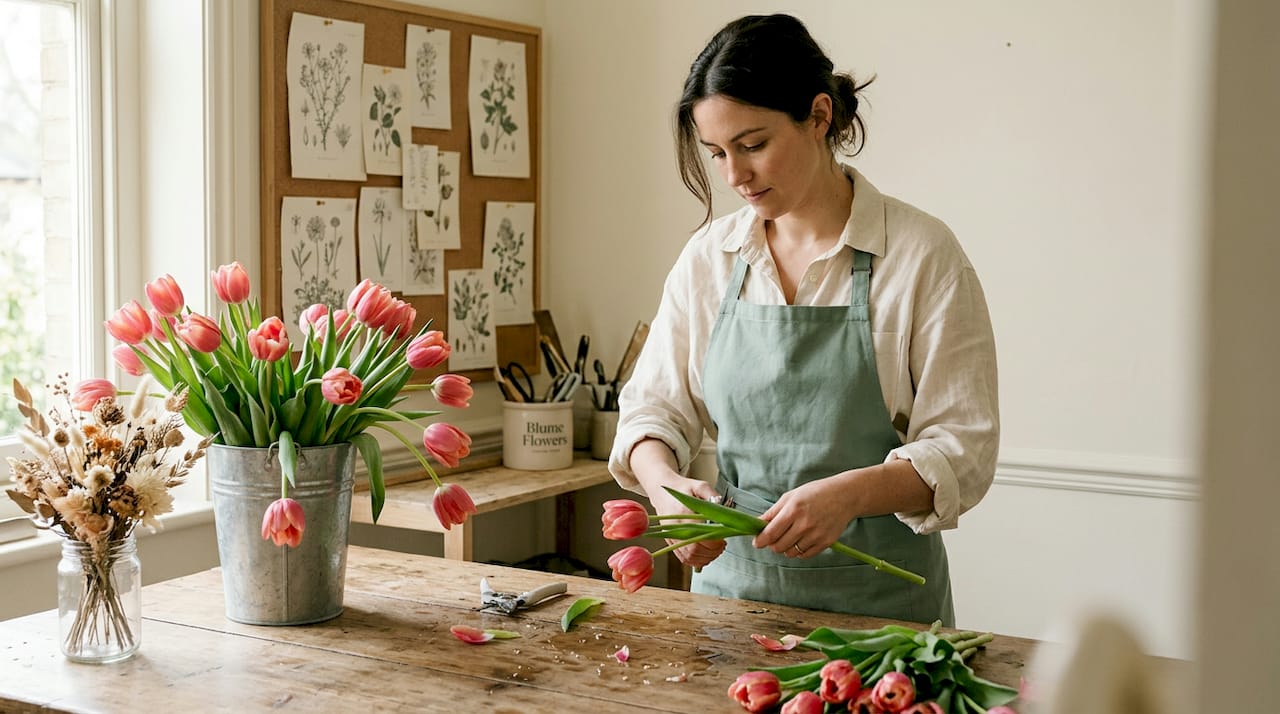
Tulips are among the most reliable spring blooms available, typically peaking between March and May in the UK. They come in almost every colour imaginable, from soft blush and cream through to deep purple and near-black. That colour range makes them extraordinarily flexible for both garden design and event styling.
For event planners, tulips offer strong stems, predictable availability, and a price point that stays reasonable when ordered in season. They work beautifully in monochrome arrangements and equally well in mixed spring bouquets alongside narcissus and ranunculus. In the garden, they are best planted as bulbs in autumn for a spring display, and they pair well with alliums for extended seasonal interest.
2. Peonies
Peonies are the undisputed statement flower of late spring. Peonies bloom April through June, making them the centrepiece choice for late spring and early summer weddings and celebrations. Their layered, lush blooms carry a fragrance that no artificial alternative replicates, and they photograph exceptionally well.
The trade-off is their short season. Miss the window and you are paying a significant premium for imported stems. When they are in season locally, though, the quality and value are unmatched. For garden planners, peonies are long-lived perennials that reward you year after year once established, with very little intervention required.
3. Ranunculus
Ranunculus sits in that rare category of flowers that look extravagant but are surprisingly affordable when sourced in season, roughly March through May. Each bloom has dozens of paper-thin petals layered tightly together, creating an almost sculptural effect. They are a favourite for bridal work precisely because they photograph like a much more expensive flower.
Ranunculus works well as a focal flower or as texture within a mixed arrangement. In terms of colour, the soft corals, peachy creams, and warm whites available in spring make them a natural fit for the romantic, garden-wedding aesthetic that remains consistently popular.
4. Roses
Roses are available year-round, but their peak season in the UK runs from late May through September. Summer roses offer superior fragrance, firmer petals, and better vase life compared to imported winter stems. For anyone building an outdoor summer event or a richly scented garden border, in-season roses are worth the timing discipline.
The variety range is enormous. Garden roses, with their full, cupped blooms and intense scent, differ markedly from commercial hybrid teas. For event use, David Austin-style garden roses offer that luxury floral impact that matches premium occasions. For borders, climbing and shrub roses extend the seasonal display well into autumn.
5. Dahlias
Few flowers rival dahlias for sheer visual impact in late summer and autumn. They peak from July through October, which makes them one of the most useful blooms in this seasonal blooms list for anyone planning late summer celebrations or autumn events. The range of forms is remarkable: dinner plate dahlias can reach 25 centimetres across, while pompom and ball varieties offer neat, graphic shapes for contemporary styling.
Dahlias are heat tolerant and long-lasting in the vase, provided you condition them properly. They are tubers rather than true bulbs, planted in spring for a summer and autumn display. Their rich jewel tones, deep burgundies, burnt oranges, and warm pinks, make them the defining flower of the rustic autumn wedding aesthetic.
6. Sunflowers
Sunflowers are one of the most straightforward seasonal blooms to source in the UK between June and September. They are drought-tolerant, fast-growing, and exceptionally long-lasting as cut flowers when stems are cut at the right stage. For outdoor events with a relaxed, countryside feel, sunflowers bring bold, cheerful colour that works without a large floral budget.
They function particularly well as structural flowers in large arrangements, providing height and scale that anchor mixed displays. They also pair naturally with other summer bloomers like zinnias, echinacea, and rudbeckia for a layered wildflower look.
7. Chrysanthemums
Chrysanthemums are the workhorses of autumn floristry. Blooming from September through November, they offer rich textures and colours at lower prices than most other cut flowers at that time of year. The variety range spans single-petalled daisy forms, dense pompoms, and shaggy spider mums, offering genuine design flexibility.
For garden use, spray chrysanthemums planted in late spring will fill borders at the exact point when summer flowers begin to fade. For event planners and florists, they are reliable, predictable, and available in bulk, which is exactly what you want when coordinating large-scale autumn displays.
8. Amaryllis
Amaryllis defines the winter bloom season, typically available from December through February. The blooms are architectural, bold, and long-lasting in cold temperatures, which gives them exceptional vase life during the cooler months. A single stem can anchor an entire arrangement.
Amaryllis and anemones are two of the most reliable winter choices for events that need impact without relying on out-of-season imports. They suit minimalist, elegant styling that works well for winter celebrations, corporate gifting, and sympathy arrangements alike.
9. Long-blooming perennials
If you are gardening rather than just event-planning, long-blooming perennials are where the real reward lies. Coneflowers bloom mid-June through September, and coreopsis carries colour from early summer right through to first frost. These are not flashy statement plants, but they provide the structural backbone that keeps a garden looking intentional across the whole season.
Long-blooming perennials reduce maintenance and deliver sustained colour compared with short-lived showstoppers that demand constant replacing. For a low-effort, high-reward approach, mixing perennials with seasonal annuals gives you both the reliability and the freshness.
10. Sweet peas
Sweet peas are the quintessential English cottage garden bloom, typically flowering from May through July with the right sowing timing. They are grown for fragrance as much as form, and their delicate, ruffled blooms in soft mauves, pinks, and creams make them especially popular for informal summer events and garden weddings.
The key with sweet peas is succession sowing. Sow in autumn or early spring indoors and again outdoors in March to extend the season. For event use, they are best sourced locally because their stems are fragile and their freshness deteriorates quickly after cutting, making long-distance transport a risky option.
11. Autumn and winter blooms compared
Understanding where autumn and winter blooms differ in character and application helps you plan more confidently for late-year events and gardens.
| Feature | Autumn blooms | Winter blooms |
|---|---|---|
| Key varieties | Chrysanthemums, marigolds, dahlias, asters | Amaryllis, anemones, evergreen foliage, roses |
| Typical availability | September to November | December to February |
| Colour palette | Warm oranges, deep reds, gold, burgundy | White, deep red, blush, forest green |
| Styling themes | Rustic, harvest, earthy | Minimal, elegant, festive |
| Vase life | Moderate (5–10 days depending on variety) | Good (amaryllis can last 2–3 weeks) |
| Cost profile | Among the most affordable cut flowers | Moderate; in-season choices remain cost-effective |
Pro Tip: For late autumn and winter events, pair amaryllis with eucalyptus or seasonal evergreen foliage. The contrast between the bold blooms and the textural greenery creates arrangements that feel luxurious without requiring a large variety of expensive stems.
12. Bloom timing and zone planning for reliable results
Your local climate zone has a greater influence on bloom timing than most gardeners realise until they have been caught out by it. Bloom timing can shift significantly by zone for the same species, which means a seasonal blooms list that works perfectly for one region may be several weeks off for another.
Here is a practical framework for planning across zones and bloom periods:
| Planning phase | What to do |
|---|---|
| Early planning (6+ weeks out) | Confirm bloom windows for your specific region or zone, not just general UK averages |
| Selection phase | Choose an anchor flower, then identify one or two alternates with overlapping bloom windows |
| Ordering phase | Place orders 1–2 weeks before your event date to secure specific stems |
| Garden design phase | Layer early, mid, and late bloomers to avoid the single-season gap problem |
For events tied to a specific date, the strategy that event professionals recommend is to treat your anchor flower as your non-negotiable and plan everything else around it. If that anchor has a tight bloom window, like a dogwood or a sweet pea, you need at least one reliable backup variety blooming at the same time.
Layering plantings that cross early, peak, and late bloomers is the single best approach for both garden design and event sourcing. Designing layered plantings that span the full season maintains pollinator support and ensures your garden or event always has something at its best.
My honest take on selecting seasonal blooms
I have seen people put together floral plans for events that look perfect on paper and then fall apart because nobody checked whether the chosen flower was actually available locally in the right week. The seasonal blooms selection guide approach only works if you connect the general advice to your specific location, date, and supply chain.
What I have learned is that the most dependable approach is to work with local seasonal sourcing wherever possible. Local, in-season blooms do not just cost less. They arrive with better stem hydration, stronger fragrance, and cleaner petals. That difference shows in finished arrangements in a way that is immediately visible.
My other hard-won lesson is about perennials. I used to focus almost entirely on showy seasonal annuals and then wonder why borders felt bare in late summer. Mixing in long-blooming perennials like coneflowers and rudbeckia changed everything. They do not demand attention, and they do not need replacing every year. They simply deliver.
If I had one thing to tell anyone building a garden or planning an event with flowers, it would be this: do not design for one season. Think in layers. Think in sequences. The best floral displays are not ones that peak brilliantly for two weeks and then disappear. They are the ones that keep giving from March through November.
— Steve
Discover beautifully curated seasonal bouquets from Blumeflowers
At Blumeflowers, every arrangement is built around what is genuinely in season. That means you get the freshest stems, the most vibrant colour, and the best possible value without the premium that comes with forcing out-of-season flowers into a design.
If spring is your season, the peony bouquet showcases the lush, romantic blooms that make April and May so special, while the tulip collection offers elegant, classic spring styling. For summer and beyond, the range expands with bold, season-led arrangements suited to birthdays, anniversaries, and prestige occasions. Blumeflowers also provides tailored corporate floral services and specialist funeral flower arrangements for clients who need seasonal quality delivered with care and precision.
FAQ
What are seasonal blooms?
Seasonal blooms are flowers that grow and peak naturally during a specific time of year in a given climate. Choosing them means better freshness, stronger fragrance, and lower cost compared to out-of-season alternatives.
What is a seasonal bouquet?
A seasonal bouquet is an arrangement built from flowers that are naturally in bloom at the time of purchase. These bouquets reflect the colours and textures of the current season and typically offer better value and quality than year-round arrangements.
How do I pick seasonal blooms for an event?
Select an anchor flower with a confirmed bloom window that matches your event date, then add one or two backup varieties blooming at the same time. Order 1–2 weeks ahead to secure your preferred stems and reduce the risk of substitutions.
Why do seasonal blooms cost less?
In-season flowers do not require heated greenhouses or long-haul transport to reach UK florists. Seasonal flowers cost 20–30% less on average because sourcing is simpler and the stems are closer to their natural growing peak.
Which flowers last longest in winter arrangements?
Amaryllis is one of the most durable winter cut flowers, lasting two to three weeks in cool indoor conditions. Evergreen foliage, anemones, and spray roses also hold well in cold temperatures, making them reliable choices for winter events and gifting.