


Flower care tips to keep your blooms vibrant
TL;DR:
- Proper flower care, including selecting healthy stems and conditioning them, significantly extends bloom longevity. Maintaining clean water, controlling environmental factors, and using flower food are essential to preserve cut flowers and garden perennials. Following these practices results in longer-lasting blooms and healthier plants, whether cut or in your garden.
Proper flower care is the difference between blooms that last three days and blooms that last three weeks. Whether you are tending a freshly delivered bouquet from Blumeflowers or nurturing perennials in your garden, the principles of good floral maintenance, known in horticulture as post-harvest care and plant husbandry, remain consistent. Select healthy stems, condition them correctly, manage water quality, and control the environment around them. Get those four things right and you will see results that most people assume only professionals can achieve.
1. How to select cut flowers for the longest vase life
The foundation of every good flower care routine is choosing the right blooms to begin with. Firm stems and robust blooms are the single most reliable indicator of longevity. Avoid anything with drooping petals, yellowing leaves, or soft, slimy stem bases. These are not cosmetic flaws. They signal that bacterial activity has already begun and the flower’s water uptake is compromised.
When cutting from your own garden, harvest in the early morning or late evening. Stems are fully hydrated at these times because the plant has not been losing moisture to midday heat. For species like roses and dahlias, cut when buds are just beginning to open. For flowers like sunflowers and zinnias, wait until they are fully open, as they do not continue developing after cutting.
Pro Tip: When buying from a florist or receiving a delivered bouquet, unwrap the flowers immediately and check the stem ends. Any brown, crushed, or dry stem base needs to be re-cut before placing in water.
For those building luxury floral displays at home, starting with premium, properly selected stems makes every subsequent care step more effective.
2. Conditioning cut flowers: the step most people skip
Conditioning is the process of preparing cut stems to absorb water efficiently before they go on display. The RHS recommends stripping all foliage from the bottom half to two-thirds of each stem. Submerged leaves rot quickly, feeding bacteria that block the stem’s vascular system and cut off water supply to the petals above.
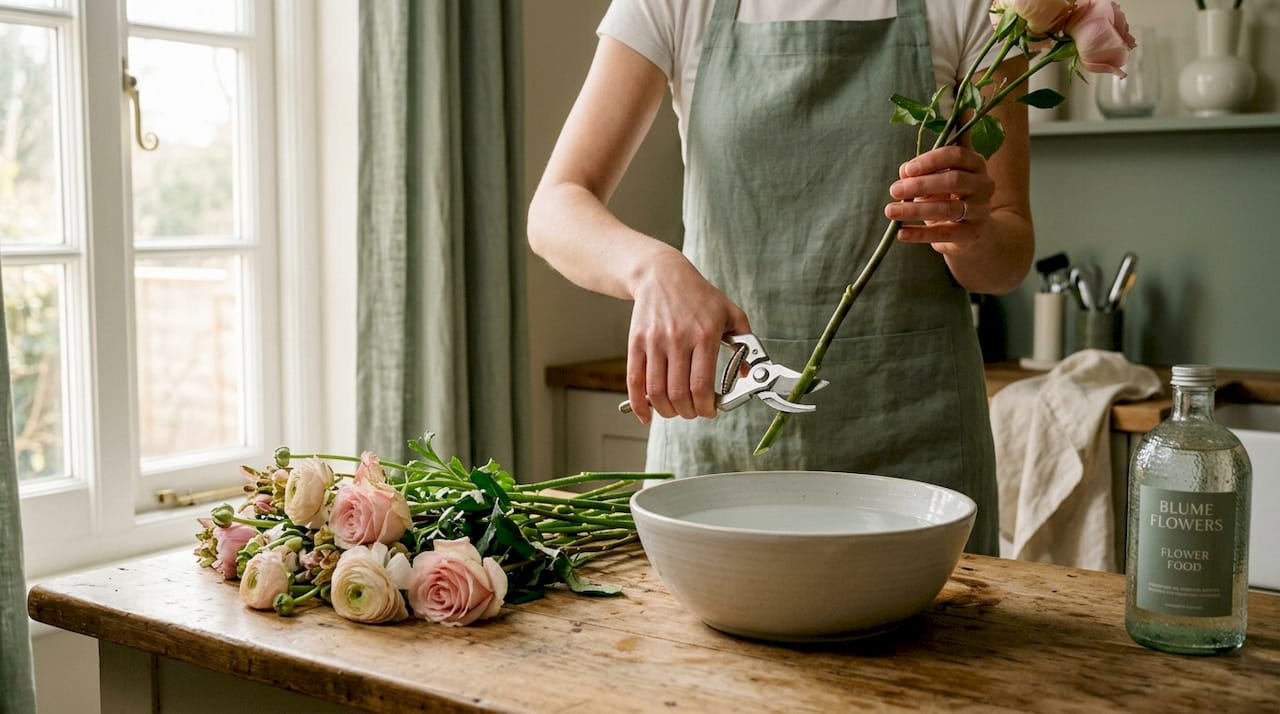
After stripping the leaves, re-cut each stem at a 45-degree angle using sharp, clean secateurs or a knife. A diagonal cut increases the surface area available for water uptake and prevents the stem from sitting flat against the vase base, which would restrict flow. Crushing the stem with blunt scissors is one of the most common and damaging mistakes in home flower care.
Once trimmed, place the stems immediately into clean, cool water and allow them to rest. A conditioning rest period of two to three hours, or ideally overnight, in a cool location allows the stems to hydrate fully before being moved to a warmer display position. This single step can add days to the life of your arrangement.
Pro Tip: Wrap the bouquet loosely in paper while it rests during conditioning. This supports the stems upright and prevents petals from dehydrating in any draught.
3. Your flower watering guide: keeping vase water clean
Water quality is the most overlooked variable in cut flower maintenance. Fill your vase nearly to the top with clean, cool water. Filtered or tap water that has been left to stand for an hour both work well. Warm water encourages bacterial growth, so avoid it unless you are deliberately using a hot water dip to revive a wilting stem.
Flower food packets are not a marketing gimmick. They contain three active components: carbohydrates to feed the blooms, citric acid to lower the water’s pH and improve uptake, and a biocide to suppress bacterial growth. This combination addresses the two main causes of early vase death, starvation and bacterial stem blockage, simultaneously.
Key water maintenance habits to build into your routine:
- Change the vase water every two days, re-cutting stems each time you do so
- Wash the vase with hot, soapy water before refilling, as bacterial residue on glass accelerates contamination of fresh water
- Remove any flower that begins to wilt immediately, as wilting blooms release ethylene gas that accelerates ageing in surrounding flowers
- Never leave foliage submerged, even briefly, as it begins decomposing within hours
Pro Tip: If you run out of flower food, a small amount of lemon juice and a pinch of sugar in clean water replicates the basic chemistry of a commercial packet.
4. Environmental factors that affect how long flowers last
Temperature is the single most powerful environmental variable in cut flower longevity. Cool, stable conditions slow the metabolic processes that cause petals to age. Keep arrangements away from radiators, sunny windowsills, and any appliance that generates heat. A spot on a shaded side table or a cool hallway will consistently outperform a sunny kitchen counter.
Direct sunlight does not just warm flowers. It also bleaches pigment from petals and accelerates moisture loss through the petals themselves. Strong draughts from open windows or air conditioning units have a similar drying effect. Gentle airflow is fine, but positioning a bouquet directly in the path of moving air will shorten its life noticeably.
“Ethylene gas is the invisible enemy of cut flowers. Ripening fruit, particularly bananas and apples, releases it in significant quantities. The RHS warns that even brief proximity to a fruit bowl can trigger premature petal drop and senescence in sensitive species like roses and carnations.”
Avoid placing bouquets near fruit bowls, compost bins, or other flowers that are already past their prime. A cool bedroom or a north-facing shelf is often the best location in a typical home.
5. Best practices for outdoor perennials and garden flowers
Garden flowers operate on different principles to cut arrangements, but the best flower care techniques for perennials share the same logic: give the plant what it needs and remove the stressors that limit it.
Soil pH between 6.0 and 7.0 suits the majority of garden perennials, including echinacea, salvia, and rudbeckia. Outside this range, nutrients become chemically locked in the soil and unavailable to roots, regardless of how much fertiliser you apply. Penn State Extension recommends applying a two to three inch layer of organic mulch annually to conserve moisture and regulate soil temperature through seasonal extremes.
Watering established perennials deeply, approximately one inch per week, encourages roots to grow downward in search of moisture rather than staying shallow and vulnerable to drought. Frequent, light watering produces the opposite effect. It trains roots to stay near the surface, making plants more susceptible to heat stress and dry spells.
| Practice | Recommended approach | Common mistake |
|---|---|---|
| Watering | Deep, once weekly | Frequent, shallow watering |
| Fertilising | Soil test first, then feed moderately | Over-applying general fertiliser |
| Mulching | 2 to 3 inches of organic matter | Leaving soil bare or mulching too deeply |
| Pruning | Deadhead regularly, divide every 3 to 4 years | Leaving spent blooms to set seed |
Overfertilising perennials produces lush, soft growth that is attractive to pests and prone to flopping, but it reduces flower production. A soil test every two to three years gives you a precise picture of what your beds actually need, rather than guessing.
6. How to troubleshoot drooping, murky water, and pest problems
Drooping stems are the most common complaint in cut flower care, and the cause is almost always one of three things: stem blockage, bacterial water contamination, or ethylene exposure. The fix for all three starts with the same action. Remove the affected stems, re-cut them under running water, and place them in a freshly cleaned vase with new water and flower food.
For severely wilted flowers, particularly roses and hydrangeas, a hot water treatment can restore turgor. Boil a small amount of water, allow it to cool to approximately 60 degrees Celsius, and place the stem ends in it for 30 seconds before transferring to cool water. The heat clears blockages in the vascular tissue and allows water to rush up the stem.
- Murky water: Change immediately, wash the vase thoroughly, and re-cut all stems before returning them to clean water.
- Pollen beetles: These small black beetles are harmless but unwanted indoors. Place the arrangement near an open window in daylight. The beetles will fly toward the light and leave the flowers.
- Hydrangeas wilting prematurely: Submerge the entire head briefly in cool water for 20 minutes. Hydrangeas can absorb moisture through their petals as well as their stems.
- Orchid care indoors: Orchids need humidity rather than frequent watering. Mist the aerial roots lightly every two to three days and keep them away from cold windowsills.
- Ethylene damage: If petals are dropping unusually fast, check for nearby fruit, wilting flowers in the same arrangement, or proximity to a gas hob.
Pro Tip: For stylish flower arranging that lasts, remove at least one third of the foliage from any arrangement before displaying it. Leaves consume water and compete with petals for the hydration the stem delivers.
Key takeaways
Consistent flower care, from selecting firm stems to managing water quality and controlling temperature, is the most reliable way to extend the life of both cut arrangements and garden perennials.
| Point | Details |
|---|---|
| Start with healthy stems | Choose firm, unblemished blooms and avoid wilted or discoloured foliage from the outset. |
| Condition before displaying | Strip submerged leaves, re-cut at an angle, and allow stems to rest in cool water for at least two hours. |
| Use flower food correctly | Flower food controls bacteria and feeds blooms; change water every two days and re-cut stems each time. |
| Control the environment | Keep arrangements cool, away from direct sun, draughts, and ripening fruit to slow ethylene-driven ageing. |
| Feed garden perennials wisely | Test soil before fertilising, water deeply once a week, and mulch annually for sustained outdoor flowering. |
What I have learned from years of watching flowers thrive and fail
The conditioning rest period is the step I see skipped most often, and it is the one that makes the biggest difference. When stems are cut and placed directly into a warm room without any resting time in cool water, they are essentially dehydrated from the start. The petals open quickly, look beautiful for a day, and then collapse. Give those same stems four hours in cool water in a quiet corner before displaying them, and the difference in longevity is striking.
Water quality matters more than most people realise. I have seen identical bouquets last four days in a dirty vase and twelve days in a clean one with fresh flower food. The bacteria that accumulate on glass and in stagnant water are not visible, but they are the primary reason most home arrangements fail early.
The outdoor perennial advice about soil testing before fertilising is something I feel strongly about. Most garden soil in the UK is already reasonably fertile, and adding more nitrogen simply produces tall, floppy plants with fewer flowers. A basic soil test from a garden centre costs very little and removes all the guesswork.
My honest recommendation is to experiment with one variable at a time. Try the overnight conditioning rest with your next bouquet. Then try flower food versus plain water. You will quickly develop an instinct for what your specific flowers respond to, and that knowledge is more useful than any single rule.
— Steve
Fresh flowers, beautifully prepared, delivered to your door

At Blumeflowers, every bouquet is prepared with the conditioning and care principles described above. The Beautifully Simple Peony Bouquet arrives with robust, firm stems ready for immediate display, and the Tulip Bouquet is harvested at the ideal stage of openness for maximum vase life at home. Both are ideal starting points for putting these flower care techniques into practice. Blumeflowers delivers across Birmingham, Solihull, and surrounding areas with same-day and next-day options, so you can have expertly sourced blooms on your table without compromise. Browse the full collection at Blumeflowers and find the arrangement that suits your space.
FAQ
How often should I change the water in a flower vase?
Change vase water every two days and re-cut the stems each time you do so. This prevents bacterial build-up, which is the leading cause of early vase-life loss in cut flowers.
Why are my cut flowers wilting so quickly?
Rapid wilting is usually caused by stem blockage from bacteria, submerged foliage rotting in the water, or ethylene exposure from nearby ripening fruit. Re-cut the stems, clean the vase, and move the arrangement away from any fruit bowl.
Do flower food packets actually work?
Yes. Flower food contains carbohydrates, citric acid, and a biocide that together feed the blooms, improve water uptake, and suppress bacterial growth. Plain water alone addresses none of these factors.
How much should I water outdoor perennials?
Water established perennials deeply to approximately one inch per week rather than applying small amounts frequently. Deep watering encourages roots to grow downward, making plants more resilient during dry periods.
What is the best position for a flower arrangement indoors?
Place arrangements in a cool, shaded spot away from radiators, direct sunlight, draughts, and fruit bowls. A north-facing shelf or a cool hallway consistently extends vase life compared to a warm, sunny kitchen.