


How to maintain luxury flower arrangements at home
TL;DR:
- Proper care, including water changes and precise trimming, significantly extends the lifespan of luxury flower arrangements. Environmental factors such as placement, temperature, and ethylene exposure greatly influence how long flowers remain fresh. Consistent daily maintenance and understanding individual flower needs are essential for maintaining elegance and longevity.
Maintaining luxury flower arrangements is a specialist practice built on clean water, precise stem care, and deliberate placement. Done correctly, it extends the life of premium blooms by days, sometimes over a week beyond what casual care achieves. The tools are simple: a pair of floral shears, flower food sachets, a clean glass or ceramic vase, and a misting spray for delicate varieties. What separates a Blumeflowers arrangement that still looks gallery-worthy on day ten from one that wilts by day four is not luck. It is method.
What tools and materials are essential for caring for luxury flower arrangements?
The right equipment makes the difference between a display that lasts and one that deteriorates quickly. You do not need a professional florist’s kit, but a few specific items are non-negotiable.
Core tools every arrangement needs:
- Floral shears or a sharp knife. Blunt blades crush stem tissue, blocking water uptake. Clean, sharp cuts are the single most important mechanical step in luxury floral arrangement care.
- A clean vase or vessel. Residual bacteria from previous use accelerates decay. Wash with hot water and a drop of bleach, then rinse thoroughly before every use.
- Flower food sachets. These contain a sugar source, an acidifier to lower pH, and a biocide to slow bacterial growth. Most premium bouquets from Blumeflowers arrive with one included.
- Filtered or room-temperature water. Hard tap water with high chlorine content can stress certain blooms. Leaving tap water to stand for an hour before use reduces chlorine levels noticeably.
Optional but genuinely useful:
- A fine misting spray for hydrangeas, ranunculus, and other moisture-sensitive petals
- Iced water for tulips and other bulb flowers that prefer cooler temperatures
- Floral foam for boxed arrangements, which requires a different hydration approach entirely
| Tool | Primary use | Care benefit |
|---|---|---|
| Floral shears | Cutting stems at 45° | Maximises water uptake surface |
| Flower food sachet | Added to vase water | Slows bacterial growth and feeds blooms |
| Misting spray | Spraying petals directly | Maintains petal hydration in dry conditions |
| Clean vase | Holding arrangement | Eliminates bacteria that weaken stems |
| Iced water | Cooling bulb flowers | Slows ageing in tulips and similar species |
Pro Tip: Wipe your floral shears with rubbing alcohol before each use. Transferring bacteria from one stem to another is a common and entirely avoidable cause of premature wilting.
How to perform daily and periodic maintenance to keep flower arrangements fresh
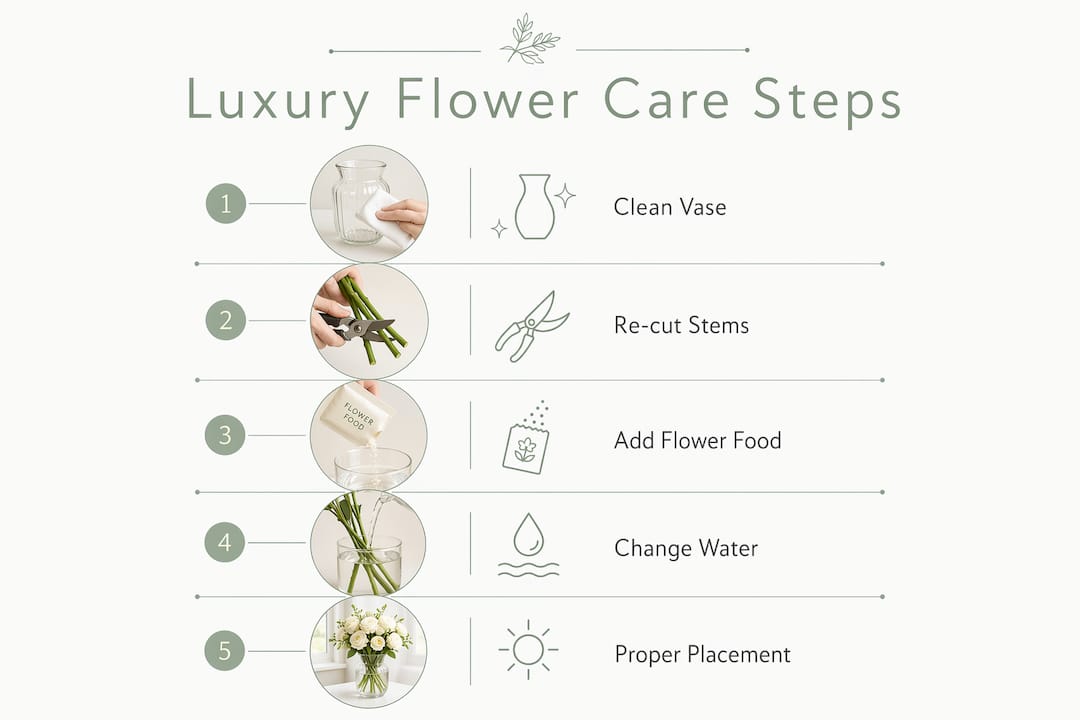
The first hour after delivery is the most critical window in the entire lifespan of a luxury arrangement. Delaying hydration, using a dirty vase, or placing flowers in direct sun during this period causes damage that no amount of later care can fully reverse. Act immediately.
Step-by-step care routine from arrival onwards:
- Fill a clean vase with room-temperature water and dissolve one flower food sachet into it.
- Remove any foliage that would sit below the waterline. Submerged leaves decompose rapidly and feed bacterial growth.
- Re-cut each stem at a 45-degree angle using sharp floral shears. Cut at least 2 centimetres from the base.
- Place the arrangement in its vase immediately, away from direct sunlight and heat sources.
- Check the water level daily. Top up before it drops below the stem bases.
- Every one to two days, change the water completely: rinse the vase, refill with fresh water and a small amount of flower food, and re-cut the stems before returning the flowers.
- Remove any blooms showing signs of decline, such as browning petals or soft stems, to prevent ethylene gas from accelerating the ageing of surrounding flowers.
The logic behind step six is worth understanding. Bacteria multiply in standing water and produce compounds that block the vascular tissue inside stems. Once that tissue is blocked, no amount of fresh water reaches the petals. Re-cutting removes the blocked section and restores uptake.
In warm summer months, increase water changes to daily. Hot, dry conditions accelerate both bacterial growth and evaporation, meaning the standard two-day schedule is simply not sufficient. A full reset on day five or six, where you remove all flowers, clean the vase thoroughly, and re-cut every stem, can extend the remaining blooms by three to five additional days.
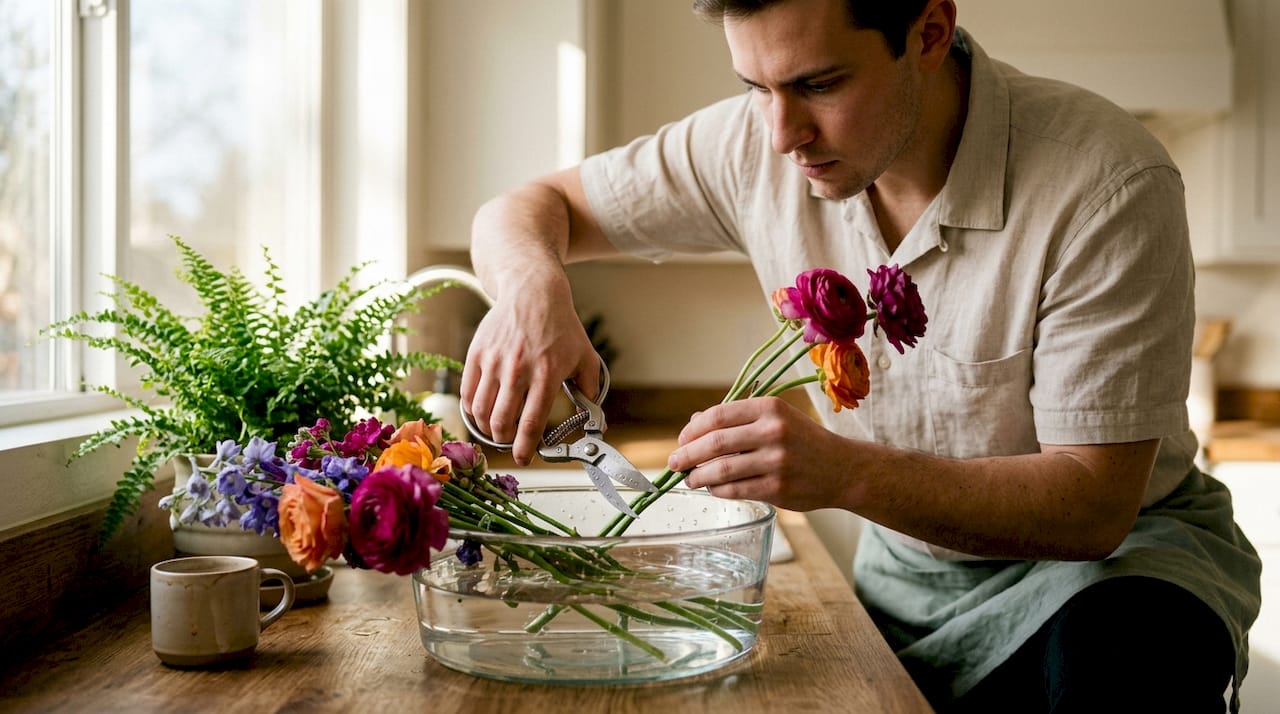
Pro Tip: When re-cutting stems, do it under running water or while the stem is submerged in a bowl. This prevents an air bubble from entering the cut end before it reaches the vase water.
How does environment affect luxury flower longevity?
Placement is as consequential as water care, yet it receives far less attention. Environmental factors such as direct sunlight, forced airflow, and ethylene gas from nearby fruit hasten flower ageing as much as any care routine misstep. You can follow every water-change protocol perfectly and still lose days of bloom life to a poorly chosen spot.
The ideal indoor temperature for most luxury arrangements sits between 18 and 22°C. This range slows cellular respiration in the petals without causing cold shock. Foam-based boxed arrangements are particularly sensitive to temperature fluctuations because the foam retains heat and can become a breeding ground for bacteria when warm.
Placement rules that protect your arrangement:
- Keep flowers away from south-facing windows where direct afternoon sun falls. Even filtered light through glass generates heat at the stem level.
- Position arrangements at least one metre from HVAC vents, ceiling fans, and radiators. Forced airflow desiccates petals within hours.
- Never place luxury bouquets near a fruit bowl. Ripening fruit, particularly bananas and apples, releases ethylene gas, which triggers premature petal drop and accelerates senescence in roses, tulips, and ranunculus.
- Avoid cold draughts from open windows in winter. Temperature swings of more than five degrees within a short period stress cut flowers significantly.
Rotating the arrangement by a quarter turn every two days prevents uneven fading and leaning. Flowers naturally orient towards the strongest light source, and without rotation, one side of the display ages faster than the other. This small habit preserves the intended silhouette of the design. For guidance on seasonal placement adjustments, the approach shifts meaningfully between winter and summer months.
Refrigerating cut flowers overnight is a technique professional florists use routinely. Cold storage can add approximately two to three days to vase life by slowing the cellular processes that lead to wilting. The critical caveat is flower type: bulb flowers like tulips and hyacinths tolerate and even prefer cooler water, while tropical varieties such as orchids and anthuriums suffer cold shock below 12°C.
How to revive wilting luxury flowers and extend arrangement lifespan
Wilting does not always mean a flower is finished. Recognising the difference between dehydration and genuine senescence determines whether revival is worth attempting.
Signs that revival is possible:
- Stems are still firm but petals appear limp or drooping
- Water in the vase has turned cloudy or developed an odour
- Leaves are yellowing but the stem base is not soft or mushy
Signs that a bloom is past saving:
- Stem base is soft, brown, or slimy
- Petals are translucent or falling without being touched
- The flower head has collapsed entirely
For dehydrated blooms, a deep hydration technique works well. Fill a clean bucket or sink with cool water and submerge the entire stem, including the flower head, for thirty to sixty minutes. This allows the petals to rehydrate directly through their surface, bypassing any stem blockage temporarily. Re-cut the stem immediately after and return it to fresh vase water.
“When water quality starts failing, a full reset is the only reliable fix. Remove every flower, wash the vessel, refill with fresh water, and re-cut every stem before returning the arrangement.” Flower Icon
For foam-based boxed arrangements, the approach differs. You cannot perform a full vase reset because the stems are anchored in foam. Instead, add small measured amounts of water directly to the foam base every other day, and re-cut any stems that have been in the foam for more than four days by removing them, trimming the base, and reinserting at a fresh angle.
Pro Tip: Add a small amount of flower food to the water you use for foam-based arrangements. Foam alone does not contain nutrients, and without supplementation, flowers in boxed designs typically fade two to three days earlier than vase arrangements.
Selectively removing blooms that are past their prime serves the whole arrangement. A single decaying flower releases ethylene gas that accelerates the decline of every bloom around it. Removing it promptly is not defeatist. It is the most effective single act of luxury bouquet preservation available to you.
Comparing care techniques for different luxury flower types
Not all luxury flowers respond to the same care routine. Applying a one-size approach to roses, orchids, tulips, and hydrangeas will produce inconsistent results. Understanding the specific needs of each species is what separates expert floral care from guesswork.
| Flower type | Water temperature | Special care note |
|---|---|---|
| Roses | Room temperature | Re-cut stems every two days; remove guard petals if browning |
| Tulips | Cool to cold | Continue growing after cutting; trim regularly to manage height |
| Ranunculus | Cool, fresh water | Mist petals daily; avoid direct sun entirely |
| Hydrangeas | Room temperature | Submerge entire head if wilting; mist frequently |
| Orchids | Room temperature | Wipe leaves; avoid waterlogging roots; minimal stem trimming |
Hydrangeas deserve particular attention because they absorb water through their petals as much as through their stems. A hydrangea that appears wilted is almost always dehydrated at the petal level rather than the stem. Submerging the entire flower head in cool water for twenty minutes revives most specimens that appear beyond saving.
Tulips present a different challenge. They continue growing after being cut, sometimes by several centimetres, which can distort the proportions of a carefully designed arrangement. Trim tulip stems every two days rather than every other day, and keep them in cool water to slow this growth. Placing a pin through the stem just below the flower head is a traditional florist technique that reduces drooping without damaging the bloom.
Orchids require the least intervention but the most precision. Overwatering is the primary cause of orchid decline in cut arrangements. Wipe the leaves with a damp cloth every few days to remove dust, which blocks light absorption, and avoid submerging the stem base in deep water.
Key takeaways
Consistent daily habits, correct placement, and species-specific care are the three pillars of maintaining luxury flower arrangements for maximum longevity.
| Point | Details |
|---|---|
| Act within the first hour | Clean the vase, re-cut stems, and add flower food immediately upon delivery. |
| Change water every one to two days | Rinse the vase, re-cut stems, and refresh flower food to prevent bacterial build-up. |
| Control placement carefully | Keep arrangements away from direct sun, heat vents, and fruit bowls to slow ageing. |
| Match care to flower type | Hydrangeas need petal misting; tulips need cool water; orchids need minimal intervention. |
| Perform a full reset when needed | Remove all flowers, wash the vessel, and re-cut every stem when water turns cloudy. |
What I have learned from years of watching luxury flowers fail too soon
The most common mistake I see is treating luxury flower care as a one-time task rather than a daily practice. People receive a beautiful arrangement, set it up correctly on day one, and then leave it entirely alone for five days. By the time they notice the decline, the bacterial load in the water has already done irreversible damage to the stems.
The second misconception is that expensive flowers are inherently more resilient. They are not. Premium varieties like garden roses, peonies, and ranunculus are often more delicate than supermarket carnations, not less. Their value lies in their visual complexity and fragrance, not their durability. That means the care routine matters more, not less, for high-end blooms.
What actually works is treating the arrangement like a living display that needs a brief daily check. Thirty seconds to top up the water, one minute every other day to change it fully, and a quick scan for any blooms showing early decline. That is genuinely all it takes. The small daily edits that preserve the arrangement’s silhouette and stem health are not burdensome. They become habit quickly, and the results are visible within the first week.
Environmental control is the underrated half of this equation. I have seen arrangements placed in ideal water conditions fail within three days because they sat next to a radiator or a fruit bowl. Move the arrangement before you change the water. Get the placement right first.
— Steve
Bring lasting luxury into your home with Blumeflowers
Blumeflowers designs every arrangement with longevity in mind, using premium seasonal blooms selected for both visual impact and staying power. Each order arrives with flower food and care guidance so you can apply everything in this article from the moment your flowers arrive. The Beautifully Simple Peony Bouquet and The Tulip Bouquet are two of the most popular choices for those who want a display that rewards careful upkeep. For corporate settings where consistent freshness matters, Blumeflowers also offers dedicated corporate flower services across Birmingham and Solihull. Explore the full collection at Blumeflowers and find an arrangement worth caring for.
FAQ
How often should I change the water in a luxury flower arrangement?
Change the water every one to two days for vase-based arrangements, rinsing the vase and re-cutting stems each time. In hot weather, daily water changes are recommended to prevent bacterial build-up.
What temperature should luxury flowers be kept at?
The ideal indoor temperature for most luxury arrangements is between 18 and 22°C. Avoid placing flowers near heat sources, cold draughts, or in rooms with significant temperature fluctuations.
Can I revive wilting luxury flowers?
Yes, if the stems are still firm. Submerge the entire stem and flower head in cool water for thirty to sixty minutes, then re-cut the stem and return it to fresh water with flower food.
Do foam-based boxed arrangements need different care?
Foam-based arrangements cannot be fully reset like vase arrangements. Add small amounts of water directly to the foam base every other day and re-cut stems after four days by removing, trimming, and reinserting them.
Does fruit near flowers actually cause them to wilt faster?
Yes. Ripening fruit releases ethylene gas, which accelerates petal drop and senescence in cut flowers. Keep luxury arrangements at least one metre away from fruit bowls, particularly bananas and apples.