


How to select art-inspired bouquets: a style guide
TL;DR:
- Art-inspired bouquets translate artworks into floral arrangements by emphasizing color, structure, and motifs. Selecting seasonal blooms and applying design principles enhance their visual impact, making them meaningful personal or gift choices. Proper care upon arrival preserves their artistic integrity and extends their freshness.
Art-inspired bouquets are floral arrangements designed to translate the visual language of a specific artwork or artistic movement into living form. Knowing how to select art-inspired bouquets means going beyond colour preference and instead reading a painting, print, or sculpture as a design brief. This guide covers how to interpret artworks, align your choices with seasonal availability, apply composition principles, and care for your arrangement once it arrives. Whether you are choosing for your own home or selecting a gift with genuine aesthetic intent, the process is more structured than most people expect.
How to select art-inspired bouquets from a specific artwork or style
The most rigorous definition of an art-inspired bouquet comes from professional floral exhibition practice. San Francisco’s Bouquets to Art exhibit at the de Young and Legion of Honor museums challenges floral designers to treat specific artworks as formal design briefs, replicating their colour, structure, and motifs in flower form. This is not decorative matching. It is systematic interpretation, and it is the standard worth applying when you choose art-inspired flowers for yourself or as a gift.
The starting point is identifying the dominant elements of the artwork you want to reference:
- Colour palette: Note the two or three colours that carry the most visual weight. A Monet water lily study, for example, is built on muted lavender, sage green, and cream rather than bright primary tones.
- Compositional structure: Is the artwork symmetrical or asymmetric? Dense and layered, or spare and minimal? A Mondrian-influenced arrangement calls for clean geometric lines, while a Klimt-inspired bouquet demands layered gold and jewel tones.
- Motifs and focal subjects: Portraits often feature a single dominant bloom as the “face” of the arrangement. Landscape paintings suggest horizontal compositions with grasses and foliage playing a structural role.
- Mood and movement: Impressionist works carry softness and blur. Post-impressionist pieces carry bold outlines and saturated hues. These qualities translate directly into flower choice and arrangement style.
The Bouquets to Art approach also emphasises staging for viewing distance. A dominant hero bloom must anchor the design’s visual narrative when seen from across a room, with supporting flowers adding texture and colour balance rather than competing for attention.
Pro Tip: Photograph the artwork you want to reference and take it with you when speaking to a florist. A visual reference removes ambiguity and gives the designer a concrete palette to work from.
Does seasonality affect the quality of art-inspired bouquets?
Seasonality is one of the most underestimated factors when choosing floral arrangements with a specific aesthetic goal. Choosing in-season flowers can reduce floral costs by up to 30% compared to importing out-of-season varieties, while out-of-season blooms can increase costs by 20 to 40%. The financial difference is significant, but the quality impact matters even more for art-inspired selections.
When a flower is sourced out of season, florists frequently substitute a similar variety. That substitution can compromise the specific colour or form you need to honour the artwork you are referencing. A pale blush garden rose in season carries a different petal structure and fragrance depth than a hothouse substitute in January. Seasonal flower selection is therefore a controllable lever for both artistic integrity and budget.
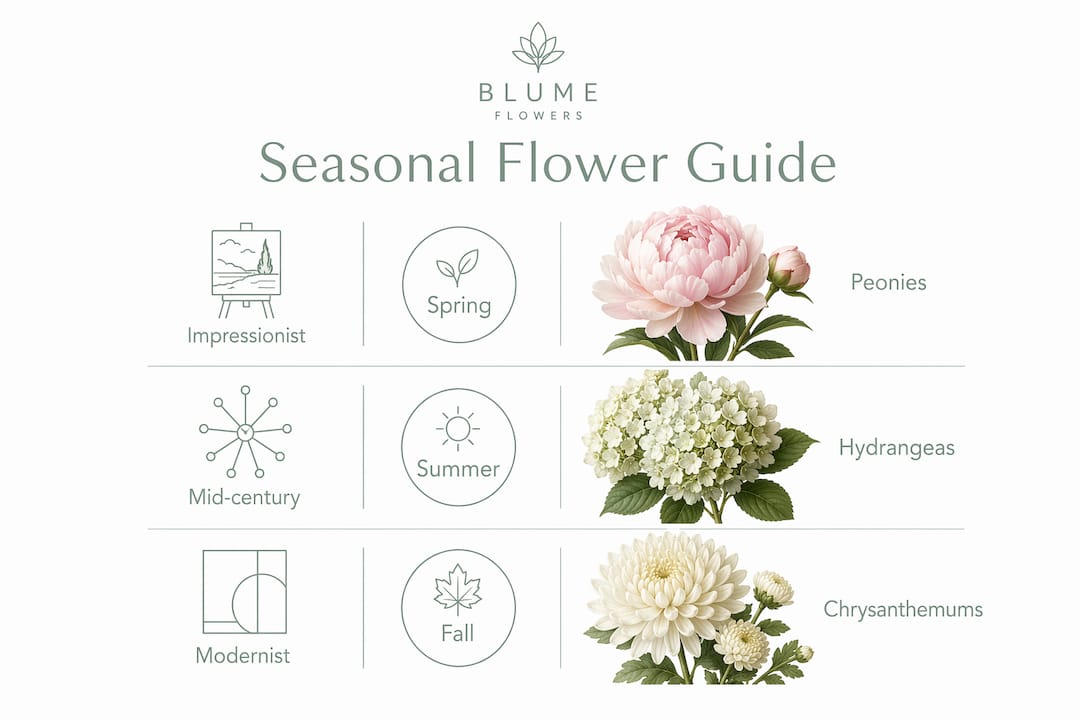
The table below maps common artistic styles to seasonally available blooms that suit them well.
| Artistic style | Season | Recommended blooms |
|---|---|---|
| Impressionist (soft, layered) | Spring | Peonies, sweet peas, ranunculus |
| Post-impressionist (bold, saturated) | Summer | Sunflowers, dahlias, zinnias |
| Art Nouveau (organic, flowing) | Late spring | Wisteria, lilac, tulips |
| Mid-century modern (graphic, restrained) | Autumn | Protea, chrysanthemum, dried grasses |
| Romantic realism (lush, classical) | Summer | Garden roses, lisianthus, delphiniums |
Pro Tip: If you are selecting a bouquet as a gift for a specific date, order two to three weeks in advance and ask your florist which blooms will be at peak availability that week. This gives you the best chance of securing the exact palette you need.
For a detailed overview of what is available month by month, the Blumeflowers guide to best seasonal blooms in 2026 is a practical reference.
What design principles make art-inspired bouquets visually impactful?
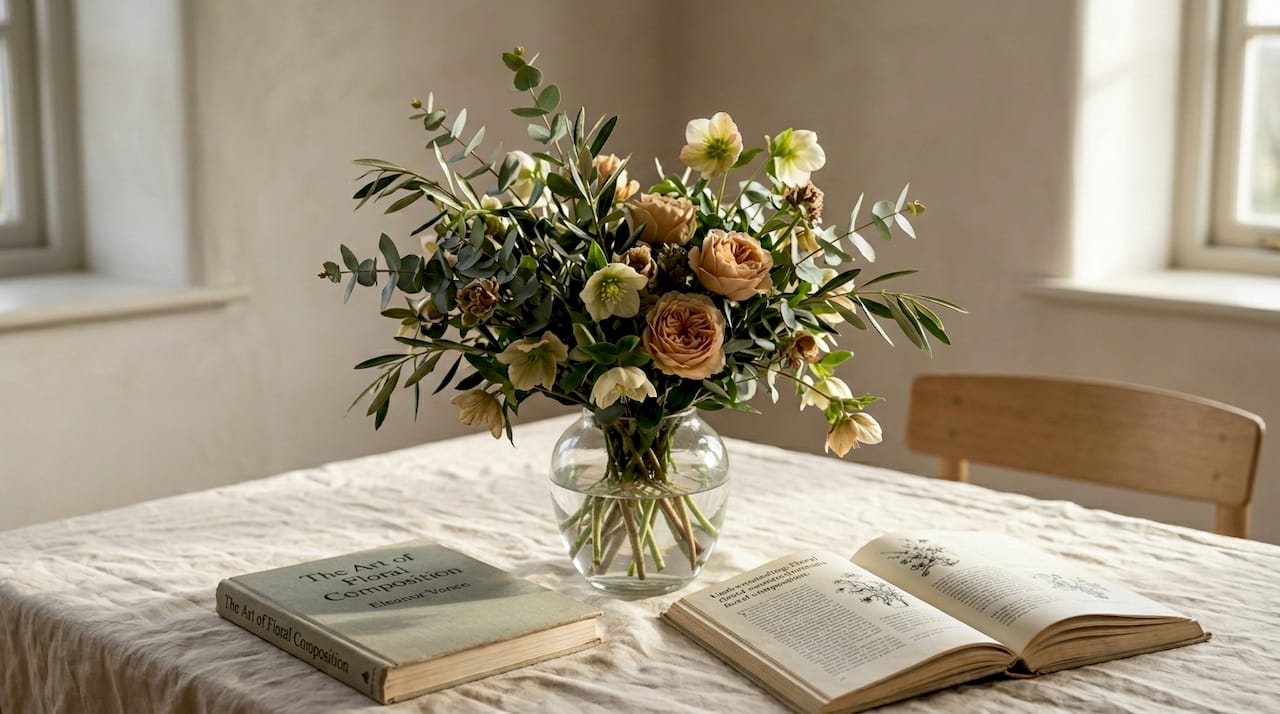
Strong composition is what separates an art-inspired bouquet from a generic mixed arrangement. The art of styling flowers for visual impact relies on building a clear focal structure: one or two large hero blooms that carry the design’s central statement, supported by mid-sized secondary flowers, and finished with fine fillers and foliage that add depth without noise.
Colour theory applied to floral design
Colour is the most direct translation point between an artwork and a bouquet. Three schemes work reliably well:
- Monochromatic: All flowers drawn from a single hue at varying tones and saturations. A white-to-deep-blush arrangement using garden roses, ranunculus, and lisianthus creates the kind of tonal depth you see in classical portraiture.
- Analogous: Colours that sit adjacent on the colour wheel, such as coral, peach, and amber. Analogous colour schemes use tone variation across flowers and foliage to evoke depth and cohesion, making them particularly effective for impressionist-style arrangements.
- Complementary: Opposite colours on the wheel, such as violet and yellow, or orange and blue. These create the visual tension you find in Van Gogh’s work and suit bold, high-contrast artistic styles.
Composition shapes and vase selection
The physical shape of your arrangement should mirror the compositional logic of the artwork it references. Oval and dome compositions suit romantic and impressionist styles. Vertical, cascading arrangements echo the drama of Baroque paintings. Low, horizontal designs work well for still-life references and table settings where the artwork is displayed nearby.
Vase choice reinforces the style signal. A clean-lined ceramic cylinder suits mid-century and modernist references. A wide-mouthed glass vessel with visible stems suits botanical illustration styles. An aged terracotta pot suits earthy, naturalistic works. The container is part of the composition, not an afterthought.
The Blumeflowers guide to artful flower arranging covers these techniques in more detail for anyone working with luxury settings.
How to care for fresh art-inspired bouquets on arrival
The aesthetic effort you put into selecting a bouquet is only preserved if the flowers are handled correctly from the moment they arrive. Fresh bouquets are typically delivered at bud-stage without water to protect them during transit. This is standard practice, not a sign of poor quality.
Follow these steps to maximise longevity and maintain the arrangement’s artistic presentation:
- Unpack immediately. Remove all packaging within an hour of delivery. Flowers left in transit wrapping begin to deteriorate quickly, particularly in warm conditions.
- Prepare the vase. Clean the vase thoroughly with hot water and a small amount of washing-up liquid, then rinse completely. Residual bacteria are the primary cause of premature wilting.
- Hydrate with flower food. Fill the vase with fresh, cool water and add the flower food sachet included with your bouquet. Flower food contains a biocide, acidifier, and sugar that together extend vase life significantly.
- Cut the stems at an angle. Use sharp scissors or a knife to cut 2 to 3 centimetres from each stem at a 45-degree angle. This increases the surface area for water uptake.
- Remove submerged foliage. Any leaves sitting below the waterline will rot and contaminate the water. Strip them before placing the flowers in the vase.
- Position away from direct heat and sunlight. Art-inspired arrangements often feature delicate blooms like peonies or sweet peas that fade rapidly in direct light. Place them where they can be admired without being exposed to a window or radiator.
Pro Tip: Change the water every two days and re-cut the stems each time. This single habit extends the life of most bouquets by three to five days.
Key takeaways
Selecting art-inspired bouquets requires treating the source artwork as a formal design brief, aligning flower choices with seasonal availability, and applying colour theory and composition principles to achieve genuine visual impact.
| Point | Details |
|---|---|
| Use the artwork as a brief | Identify the palette, structure, and motifs before selecting a single flower. |
| Prioritise seasonal blooms | In-season flowers reduce costs by up to 30% and protect artistic integrity by minimising substitutions. |
| Apply a defined colour scheme | Monochromatic, analogous, or complementary schemes translate art palettes into coherent floral designs. |
| Match vase to artistic style | The container reinforces the style signal and is part of the overall composition. |
| Care correctly on arrival | Immediate hydration, clean vases, and stem re-cutting preserve the arrangement’s aesthetic for longer. |
Why art and flowers belong together more than people realise
I have spent years watching people select flowers the same way they choose a greeting card: quickly, by occasion, and without much thought for what the arrangement actually says. Art-inspired bouquets change that entirely, and I think they represent the most underused form of personal expression available to most people.
What strikes me most about the Bouquets to Art model is how it exposes the gap between decorative floristry and intentional floral design. When a designer is given a Klimt painting and asked to build something that honours it in three dimensions, the result is never just pretty. It is a conversation between two art forms. That conversation is available to anyone willing to look at a painting before they look at a price list.
The practical reality is that most people stop at colour. They see a painting they love and ask for “something warm and earthy.” That is a start, but it misses the structural logic that makes the original artwork compelling. The bouquet’s mood and artful presence in a room comes from composition as much as colour. A loose, asymmetric arrangement of dahlias and dried grasses placed next to a mid-century print creates a dialogue. A tight dome of mixed roses placed next to the same print creates a contradiction.
My honest recommendation is to start with one artwork you genuinely love, identify its three most dominant colours, and ask your florist to build around a single hero bloom that matches the painting’s focal point. The result will be more considered, more personal, and more memorable than anything chosen by occasion alone.
— Steve
Discover art-inspired bouquets from Blumeflowers
Blumeflowers designs every arrangement with the same attention to colour, composition, and seasonal quality that this guide describes. The full flower collection includes bouquets suited to impressionist palettes, mid-century styling, and romantic realist aesthetics, all available for same-day and next-day delivery across Birmingham and Solihull. The beautifully simple peony bouquet is a strong starting point for anyone drawn to soft, painterly arrangements with genuine visual depth. Every order is crafted by hand with seasonal blooms sourced for freshness and artistic coherence.
FAQ
What makes a bouquet “art-inspired”?
An art-inspired bouquet is one designed to reflect the colour palette, composition, and motifs of a specific artwork or artistic movement. The Bouquets to Art exhibit in San Francisco defines this as treating the artwork as a formal design brief rather than a loose visual reference.
Which flowers work best for impressionist-style arrangements?
Peonies, ranunculus, and sweet peas are the most effective choices for impressionist-style bouquets because their layered petals and soft tonal variation mirror the blurred, light-filled quality of impressionist painting. Spring is the optimal season for sourcing all three at peak quality.
How do I match a bouquet to an artwork’s colour palette?
Identify the two or three dominant colours in the artwork and apply a defined colour scheme, either monochromatic, analogous, or complementary, to your flower selection. Analogous schemes using tone variation across flowers and foliage are particularly effective for translating complex art palettes into cohesive floral designs.
Does buying seasonal flowers really save money?
Choosing in-season blooms reduces floral costs by up to 30% compared to importing out-of-season varieties. Beyond cost, seasonal flowers arrive fresher and are less likely to be substituted, which protects the artistic integrity of your chosen palette.
How long will an art-inspired bouquet last?
Most fresh bouquets last seven to twelve days with correct care. Immediate hydration on arrival, clean vases, flower food, and stem re-cutting every two days are the four practices that make the greatest difference to longevity.