


Local sourcing in luxury floristry: quality and craft
TL;DR:
- Local sourcing in luxury floristry involves obtaining flowers from nearby growers and farms, resulting in longer vase life and better quality. It reduces environmental impact and waste by minimizing transport and handling, while supporting regional agriculture. A hybrid approach using around 80% local stems balances sustainability with seasonal and scale constraints.
Local sourcing in luxury floristry is defined as the practice of procuring flowers and foliage from regional growers, markets, and farms within close proximity to the design studio or delivery point. The role of local sourcing in luxury floristry extends well beyond environmental principle. It directly determines vase life, stem quality, design flexibility, and the emotional resonance a finished arrangement carries. Locally sourced stems last 7–10 days compared to just 3–4 days for mass-imported flowers. That difference alone reshapes what luxury means in a floral context. The industry term for this approach is artisanal flower sourcing, and the most forward-thinking florists in 2026 treat it as a core design discipline, not an optional add-on.
How does local sourcing enhance the quality of luxury floral arrangements?
Quality in high-end floral design is inseparable from supply chain length. The shorter the journey from field to vase, the more a flower retains its cellular integrity, fragrance, and movement. These are the properties that separate a truly premium arrangement from one that merely looks expensive in a photograph.
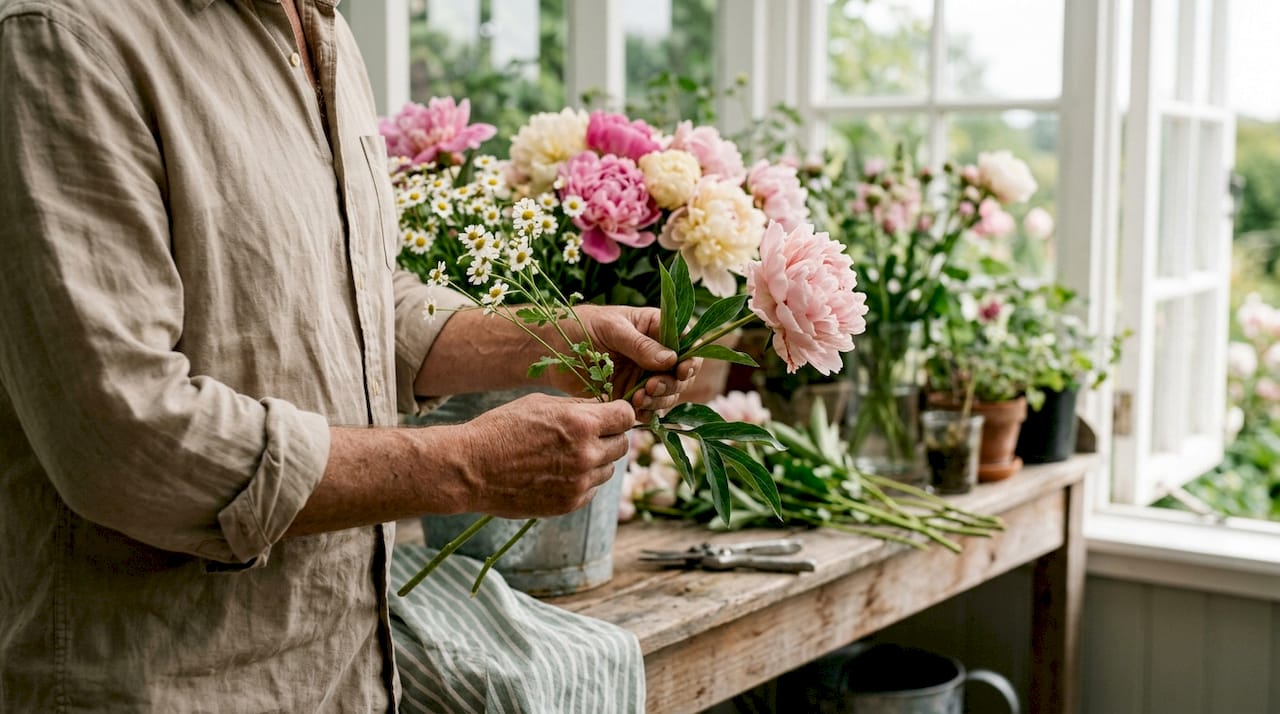
Conventional supply chains lose up to 40% of stock to damage and spoilage before a flower reaches the florist. Local sourcing collapses that figure dramatically. Fewer handling stages, no extended cold storage, and no long-haul freight mean stems arrive with their natural structure intact.
The aesthetic benefits are equally significant:
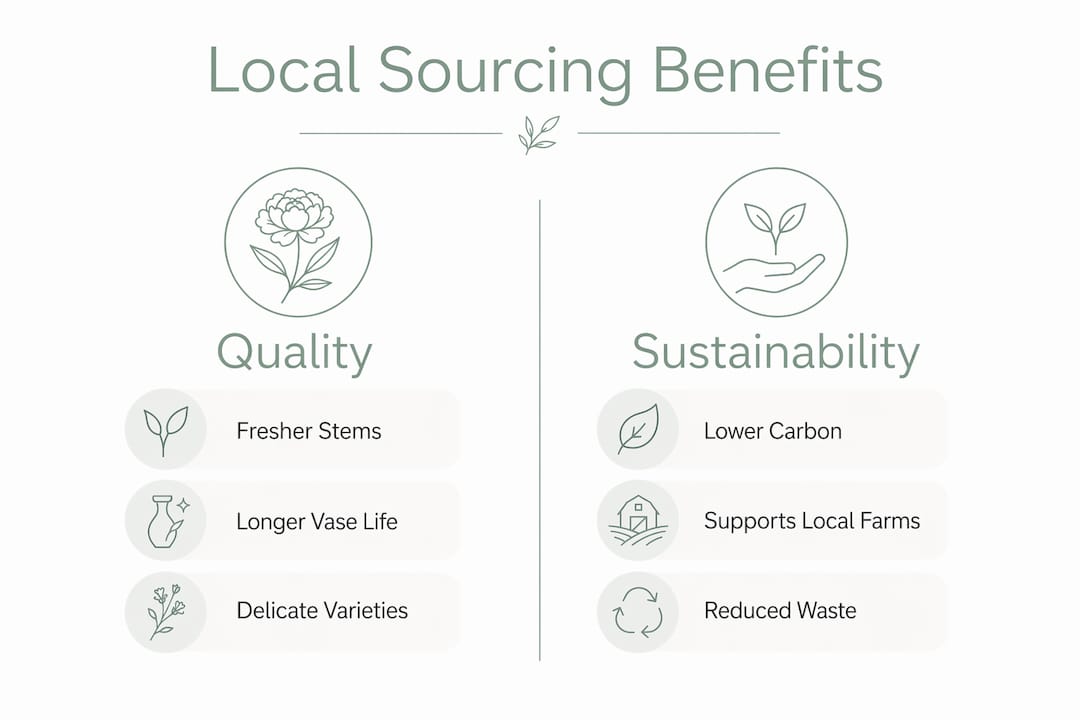
- Vase life: Locally sourced flowers last 7–10 days versus 3–4 days for imported stems, giving clients genuine value for a luxury price point.
- Movement and fragility: British-grown sweet peas, garden roses, and ranunculus carry a natural looseness that imported, conditioned stems cannot replicate. That organic quality is what clients pay a premium for.
- Fragrance: Cold chain transport suppresses scent. Locally cut flowers retain their full aromatic profile, which is a defining characteristic of a genuinely luxurious arrangement.
- Seasonal character: A stem cut at peak season in its native climate expresses colour, texture, and form at its absolute best.
Local stems often require specialised floral mechanics because their delicate cellular structure cannot withstand the compression of traditional plastic foam. Hand-tied structures and foam-free mechanics preserve the stem’s integrity and allow the natural movement of the flower to read clearly in the finished design. This is a skill distinction that separates artisanal florists from volume producers.
Pro Tip: When selecting local varieties for a luxury commission, prioritise stems with a short harvest-to-design window of 24–48 hours. Garden roses, lisianthus, and sweet peas all perform significantly better when conditioned overnight in a cool environment before arrangement.
What sustainability benefits does local sourcing provide in luxury floristry?
Sustainable luxury flowers are not a marketing category. They are the product of specific sourcing decisions that reduce environmental harm at every stage of the supply chain. Local sourcing addresses the most carbon-intensive part of conventional floristry: long-distance refrigerated transport.
Local flowers reduce carbon footprint by cutting transport emissions and reducing dependence on the cold chain. That cold chain, which keeps imported stems viable across thousands of miles, is one of the most energy-intensive logistics systems in the food and agriculture sector. Removing it from the equation is a material environmental gain, not a symbolic one.
The ecological benefits extend further than carbon:
| Factor | Local sourcing | Mass-imported sourcing |
|---|---|---|
| Transport emissions | Minimal, regional road or direct delivery | High, air and refrigerated freight |
| Cold chain reliance | Low to none | Continuous from farm to florist |
| Chemical use | Often lower, smaller-scale growers | Higher pesticide and preservative use |
| Pollinator impact | Supports local ecosystems | Monoculture farming can reduce biodiversity |
| Waste from spoilage | Significantly reduced | Up to 40% shrinkage in conventional chains |
| Economic benefit | Supports regional growers and communities | Profit leaves the local economy |
Supporting local growers also sustains regional agricultural knowledge and biodiversity. Small-scale British flower farmers, such as those supplying through the Flowers from the Farm network, grow a far wider range of species than commercial import operations. That variety feeds directly into the creative range available to luxury florists.
Sustainability in luxury floristry is best achieved through thoughtful sourcing strategies, not rigid performative rules. A florist who sources 85% locally and imports ethically certified stems for the remaining 15% is making a more considered environmental choice than one who claims 100% local sourcing but cannot verify their supply chain.
Pro Tip: Ask your local growers directly about their pesticide and soil management practices. Many small-scale British flower farmers use minimal chemical inputs but are not formally certified organic. That conversation is more revealing than a label.
What are the practical limitations of relying solely on local sourcing?
The importance of local sourcing is clear, but a 100% local model is not viable for most luxury florists operating at scale. Seasonality is the primary constraint. British winters offer limited cutting material, and clients commissioning luxury arrangements in january or february expect a breadth of choice that the domestic growing calendar cannot always provide.
The most credible approach in 2026 is the hybrid sourcing model. Sustainable floristry standards recommend targeting at least 80% local and seasonal stems, using imports only for specific client needs or off-season gaps. This benchmark balances environmental responsibility with the commercial and creative demands of luxury work.
Practical limitations luxury florists navigate include:
- Seasonal gaps: Peonies, sweet peas, and dahlias have defined British seasons. Outside those windows, local supply disappears almost entirely.
- Scale constraints: A single local grower cannot supply a large corporate installation or a high-volume wedding season without advance planning and multiple supplier relationships.
- Consistency: Imported stems are conditioned to a standardised appearance. Local flowers vary by week and weather, which requires greater design flexibility from the florist.
- Client expectations: Luxury clients often request specific flowers regardless of season. Managing those expectations requires honest, confident communication about sourcing choices.
Florists who disclose their sourcing composition to clients, stating clearly what percentage is local versus imported, build stronger trust and brand integrity than those who make vague sustainability claims. Transparency is not a weakness. It is a mark of professional confidence.
Luxury florists working with seasonal flower arrangements find that designing around availability, rather than fighting it, produces more original and memorable work.
How does local sourcing improve the customer experience in high-end floral design?
The customer experience in luxury floristry is shaped by every detail from the moment of ordering to the final day a flower holds its form in the vase. Local sourcing improves that experience at multiple points simultaneously.
- Longer vase life: A locally sourced arrangement lasting 7–10 days delivers measurably better value than an imported equivalent lasting 3–4 days. Clients notice. Repeat orders follow.
- Fresher delivery: Local florists offer better delivery control with fewer intermediaries, reducing the risk of late arrivals and transit damage. For same-day or next-day delivery, this is a decisive advantage.
- Stronger fragrance: Scent is one of the most emotionally powerful properties of fresh flowers. Locally cut stems carry their full fragrance profile in a way that cold-chain imports rarely do.
- Storytelling and provenance: Clients respond to knowing where their flowers were grown. A bouquet featuring British-grown sweet peas from a named Worcestershire farm carries a narrative that a generic imported arrangement cannot match.
- Seasonal relevance: Flowers that are in season locally feel right for the moment. A spring arrangement built around British tulips and narcissi connects emotionally in a way that out-of-season imports do not.
The storytelling dimension of artisanal flower sourcing is particularly powerful in the gifting context. When Blumeflowers designs a luxury arrangement around seasonal British blooms, the recipient receives not just flowers but a connection to place and time. That perceived value is real, and it justifies the premium price point. Florists who communicate this well, through card messages, packaging notes, or social content, convert single purchases into loyal relationships.
What best practices should luxury florists follow when incorporating local sourcing?
Integrating local sourcing effectively requires planning, supplier relationships, and a design philosophy that treats seasonality as a creative asset rather than a constraint.
- Build direct grower relationships: Visit local flower farms, attend Flowers from the Farm events, and establish supply agreements before the season begins. Last-minute sourcing from local growers rarely produces the quality or consistency luxury work demands.
- Understand the seasonal calendar: Map out which British varieties are available month by month. Design your signature collections around those windows rather than trying to replicate the same look year-round.
- Apply appropriate mechanics: Local stems require hand-tied structures and foam-free techniques to preserve their cellular integrity. Investing in these skills is non-negotiable for quality outcomes with delicate seasonal material.
- Educate clients proactively: Share your sourcing philosophy at the point of enquiry. Clients who understand why you work with local growers are more receptive to seasonal substitutions and more loyal to your brand.
- Apply the hybrid model strategically: Use imports for specific blooms that have no viable British equivalent, such as tropical foliage or out-of-season orchids, while maintaining a local core. Aim for the 80% local benchmark during peak British growing seasons.
Pro Tip: Frame your sourcing transparency as a brand strength, not an apology. Telling a client “this arrangement is 85% British-grown, with ethically certified Dutch roses for the remaining stems” positions you as a knowledgeable professional, not a florist making excuses.
Understanding bespoke bouquet design deepens the case for local sourcing further. Custom work built around seasonal availability produces genuinely original results that mass-market floristry cannot replicate.
Key takeaways
Local sourcing in luxury floristry is the single most effective way to improve vase life, reduce waste, support regional growers, and deliver a customer experience that justifies a premium price point.
| Point | Details |
|---|---|
| Vase life advantage | Locally sourced stems last 7–10 days versus 3–4 days for mass-imported flowers. |
| Waste reduction | Conventional supply chains lose up to 40% of stock; local sourcing cuts that figure significantly. |
| Hybrid sourcing standard | Aim for at least 80% local stems during peak seasons, using ethical imports for the remainder. |
| Mechanics matter | Delicate local stems require foam-free, hand-tied structures to preserve cellular integrity. |
| Transparency builds trust | Disclosing sourcing composition to clients strengthens brand credibility and repeat business. |
Why I think the sourcing conversation in luxury floristry is still too timid
The industry talks about sustainability constantly, but the honest conversation about sourcing trade-offs is still rare. Most florists either claim full local purity they cannot verify, or they stay silent about imports to avoid scrutiny. Neither approach serves clients or the profession.
What I have observed, working closely with florists and growers across the Midlands and beyond, is that clients respond far better to honesty than to vague green credentials. When you tell someone their arrangement includes British-grown lisianthus from a farm in Lincolnshire alongside ethically certified stems from a Fairtrade-certified Dutch grower, they feel informed and respected. That is a more powerful brand position than any sustainability badge.
The future of eco-friendly floristry practices lies in florists becoming genuine supply chain advocates, not just designers. The florists who will lead the next decade are those who know their growers by name, understand the seasonal calendar deeply, and communicate that knowledge with confidence. Rigid rules about 100% local sourcing miss the point. Thoughtful sourcing values the global flower ecosystem, balancing local peak season work with ethical global partnerships. That nuance is where real professional authority lives.
— Steve
Luxury bouquets crafted with seasonal British blooms
Blumeflowers designs each arrangement around the principles explored in this article: fresh seasonal stems, shorter supply chains, and a commitment to quality that shows up in every vase.
The Beautifully Simple Peony Bouquet showcases British-season peonies at their peak, with the kind of fragrance and movement that only a short field-to-studio journey produces. For a classic British arrangement, The Tulip Bouquet celebrates home-grown stems with an elegance that imported alternatives rarely match. Both are available for same-day and next-day delivery across Birmingham and Solihull, with the freshness and reliability that local sourcing makes possible.
FAQ
What is local sourcing in luxury floristry?
Local sourcing in luxury floristry means procuring flowers and foliage from regional growers and farms close to the design studio. It is the industry practice most directly linked to superior vase life, reduced waste, and authentic seasonal design.
Why do locally sourced flowers last longer?
Locally sourced flowers last 7–10 days because they travel shorter distances with fewer handling stages, preserving cellular integrity. Mass-imported stems typically last only 3–4 days due to extended cold chain transport and conditioning.
Can a luxury florist source 100% locally?
A 100% local model is not practical for most luxury florists due to seasonal gaps and scale constraints. The 2026 industry benchmark recommends at least 80% local stems during peak seasons, with ethical imports covering the remainder.
How does local sourcing affect floral mechanics?
Local stems are often more delicate than conditioned imports and require foam-free, hand-tied structures to preserve their natural movement and cellular integrity. This approach is both better for the flower and aligned with sustainable design practice.
Does local sourcing increase the cost of luxury arrangements?
Local sourcing can carry a higher unit cost for certain stems, but it reduces waste from spoilage and improves the finished arrangement’s longevity. For luxury clients, the extended vase life and provenance story represent clear added value that supports the premium price point.