


What is a designer flower box: the complete guide
TL;DR:
- A designer flower box combines luxury blooms with a decorative container, creating a complete display. These arrangements trace back to Victorian hatboxes and now serve as elegant, reusable gifts for various occasions. They feature carefully chosen flowers, structured shapes, and built-in hydration for long-lasting beauty.
A designer flower box is defined as a luxury floral arrangement presented within a decorative, structured container, combining aesthetic beauty, practical convenience, and emotional significance in a single gift. Unlike a traditional bouquet, the box itself forms part of the presentation, making the entire package a considered design object. The floral industry recognises these arrangements as a modern reinterpretation of Victorian hatboxes, carrying with them a symbolism of refined romance and timeless elegance. Blumeflowers creates designer flower boxes that sit firmly within this tradition, pairing premium seasonal blooms with polished, reusable containers for gifting and home décor alike.
What is a designer flower box and where did it come from?
The designer flower box traces its origins directly to the Victorian era, when hatboxes were a staple of upper-class life. Ladies used these sturdy, lidded containers to store and transport their elaborate hats, and the boxes were often adorned with ribbons and flowers as decorative flourishes. That detail, a flower placed atop a beautiful box, planted the seed for what would become one of the most enduring formats in luxury gifting.
Florists began adapting the hatbox format in the late twentieth century, placing fresh arrangements inside the containers rather than on top of them. The result was a gift that felt complete before it was even opened. The box communicated care and occasion before a single bloom was seen.
“The transition from hatboxes to floral boxes adds an enduring aura of elegance and nostalgia to modern designer flower boxes, heightening their emotional impact.”
The floral industry has since built an entire gifting culture around this format. What began as a practical storage solution for Victorian accessories has evolved into a symbol of sophisticated gifting across birthdays, anniversaries, corporate events, and sympathy occasions. The hatbox’s association with luxury and femininity transferred naturally to flowers, two things that have always carried emotional weight in British culture.
Key milestones in the evolution of the designer flower box include:
- Victorian hatboxes adorned with ribbons and occasional floral decoration, establishing the visual language of the format
- Late twentieth century floristry adopting the hatbox as a floral container, creating the first true designer flower boxes
- Contemporary gifting culture embracing the format for its presentation value, reusability, and emotional resonance
- Modern luxury retail refining the concept with premium materials, bespoke colour palettes, and same-day delivery services
What are the popular styles and flower varieties used?
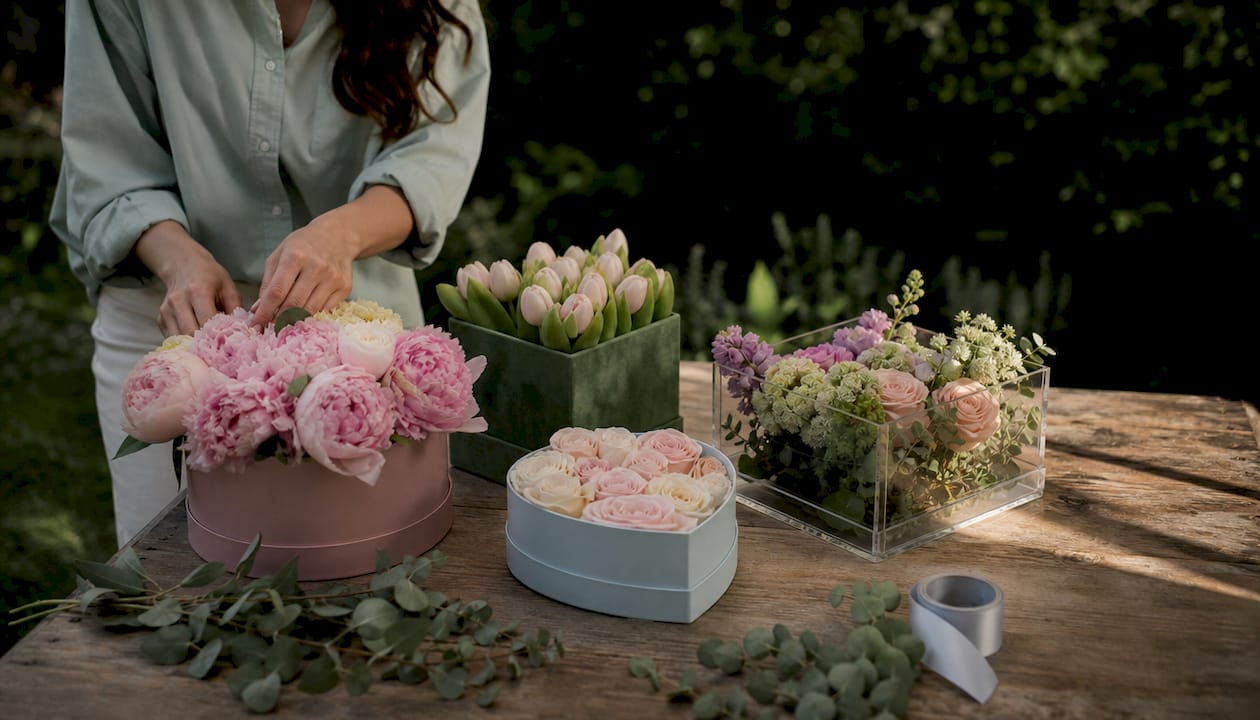
Designer flower boxes come in a range of container shapes, each suited to a different occasion or aesthetic. Round, square, heart-shaped, and transparent acrylic containers are the most widely used formats. Round boxes feel classic and balanced; square boxes suit corporate or architectural interiors; heart-shaped boxes carry obvious romantic intent; and acrylic containers add a contemporary, gallery-like quality by making the stems and water visible.
Flower varieties and their roles
The flowers chosen for a designer box are never arbitrary. Roses, peonies, hydrangeas, tulips, and lisianthus are the most common choices, selected for their structure, longevity, and symbolic meaning. Roses carry romance and respect. Peonies suggest abundance and softness. Hydrangeas fill space with texture and volume. Tulips bring a clean, graphic quality. Lisianthus, often mistaken for roses or peonies, adds ruffled depth at a lower cost per stem, making it a favourite for layered arrangements.
Greenery plays an equally deliberate role. Eucalyptus adds a silvery, aromatic quality that extends the visual depth of an arrangement. Ferns introduce a wilder, more organic feel. These fillers prevent the arrangement from looking flat or overly formal, giving the eye somewhere to rest between focal blooms.
| Box shape | Best occasion | Design character |
|---|---|---|
| Round | Birthdays, anniversaries | Classic, balanced, timeless |
| Square | Corporate, sympathy | Structured, architectural |
| Heart-shaped | Valentine’s Day, romance | Expressive, emotionally direct |
| Acrylic | Contemporary gifting | Modern, gallery-quality |
A rosboxar, a term from Scandinavian gifting culture, refers specifically to a luxury box filled with roses arranged in a tight, grid-like pattern. This format has become particularly popular for romantic and corporate gifting, where visual impact matters as much as the flowers themselves.
Pro Tip: When choosing a flower box for a home interior, match the box colour to your existing palette rather than the flowers. A neutral box with bold blooms creates a more considered, editorial look than a matching set.
For inspiration on how current designers are working with these formats, the 2026 floral styling guide from Blumeflowers shows how colour and container shape interact in contemporary arrangements.
How are designer flower boxes created?
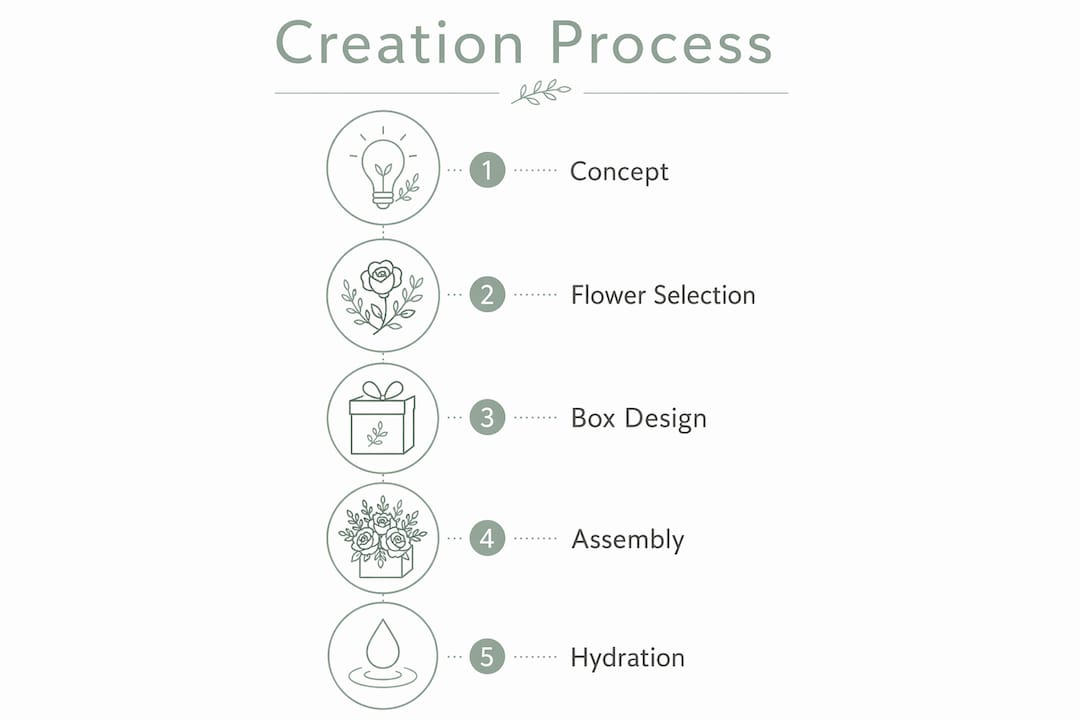
The creation of a designer flower box is a deliberate, layered process that balances horticulture with visual design. A florist begins by selecting blooms at a specific stage of development, not fully open, but not tightly budded either. This ensures the arrangement reaches its peak appearance after delivery, rather than before it.
The practical engineering of the box matters as much as the flowers inside it. Sturdy materials like corrugated cardboard allow for handles, ventilation holes, and decorative printing, all of which contribute to the unboxing experience. The box must protect the flowers during transit while also functioning as the display vessel once the recipient opens it.
The numbered steps a florist follows when building a designer flower box are:
- Condition the flowers by cutting stems at an angle and placing them in water for several hours before arranging
- Prepare the container by lining it with a water-retaining foam or a sealed inner vessel to keep blooms hydrated
- Place focal flowers first, positioning the largest or most visually dominant blooms to establish the arrangement’s structure
- Add secondary flowers around the focal blooms to build depth and fill gaps without crowding
- Introduce greenery and fillers to soften edges, add texture, and create a finished, natural appearance
- Secure and seal the arrangement so it travels without shifting, then add any finishing details such as ribbon, tissue, or a personalised card
The built-in hydration system is one of the most practical advantages of the format. Because the box acts as its own vase, the recipient does not need to find a container or trim stems on arrival. This makes designer flower boxes particularly well suited to office deliveries and surprise gifts, where the recipient may not have immediate access to a vase.
Pro Tip: Ask your florist to use floral foam rather than a water-filled inner vessel if the box will be transported over a long distance. Foam retains moisture without the risk of spillage.
Customisation options extend well beyond flower choice. Box size, colour, finish, and even the printing on the exterior can be tailored to a specific occasion or brand identity. For corporate clients, this means a flower box can carry a company’s visual identity as naturally as any branded gift.
Why choose a designer flower box as a gift or for home décor?
A designer flower box is chosen over a traditional bouquet for three clear reasons: presentation, convenience, and longevity. The arrangement arrives ready to display, requiring no vase, no trimming, and no styling from the recipient. That readiness is a form of consideration that a wrapped bouquet cannot replicate.
The reusable decorative container extends the gift’s life well beyond the flowers themselves. Once the blooms have faded, the box remains as a storage vessel, a desk organiser, or a display piece. This dual function makes the format particularly appealing to home decorators, who value objects that earn their place in a room.
The occasions suited to a designer flower box are broader than most buyers realise:
- Romantic gifting: Valentine’s Day, anniversaries, and proposals benefit from heart-shaped or rose-filled formats
- Celebratory occasions: Birthdays and new arrivals suit colourful, abundant arrangements with peonies or tulips
- Corporate gifting: Square boxes with neutral palettes work well for client appreciation and office reception displays
- Sympathy and condolence: White or cream arrangements in classic round boxes offer quiet, dignified comfort
- Home décor: Seasonal arrangements in reusable boxes add a considered, editorial quality to living spaces
The emotional resonance of a designer flower box also exceeds that of a standard bouquet. The structure of the gift signals that thought and effort went into the selection. For stylish floral gifting across all these occasions, the format consistently outperforms looser alternatives in perceived value and recipient satisfaction.
Key takeaways
A designer flower box is the most considered format in luxury floral gifting, combining a decorative container, curated blooms, and built-in practicality into a single, ready-to-display arrangement.
| Point | Details |
|---|---|
| Historical roots | Designer flower boxes evolved from Victorian hatboxes, carrying symbolism of elegance and romance. |
| Box shapes matter | Round, square, heart-shaped, and acrylic containers each suit different occasions and aesthetics. |
| Flower selection is deliberate | Roses, peonies, hydrangeas, tulips, and lisianthus are chosen for structure, longevity, and meaning. |
| Built-in practicality | The box acts as its own vase, keeping flowers hydrated without requiring a separate container. |
| Dual-purpose gift | The reusable container extends the gift’s value beyond the life of the flowers themselves. |
Why designer flower boxes have earned a permanent place in my gifting repertoire
I have worked with floral gifts long enough to notice what actually lands with people and what gets forgotten by the following week. A standard bouquet, however beautiful, creates immediate work for the recipient. They need scissors, a vase, and a clear surface. A designer flower box removes all of that friction. It arrives as a finished object, and that completeness is what people remember.
What strikes me most about the format is how well it travels across occasions. I have seen the same round hatbox format work at a corporate reception in Birmingham and at a kitchen table on a Sunday morning. The container does the contextual work. You choose the flowers for the emotion, and the box handles the setting.
The Victorian heritage of the format is not just a marketing story. It genuinely changes how people receive the gift. There is something about a lidded box that creates anticipation in a way a wrapped bouquet cannot. The act of lifting the lid is a small ceremony, and ceremonies matter in gifting.
My practical advice: do not default to roses simply because they are the obvious choice for a box format. Peonies in a round box, particularly in blush or coral, create an arrangement that looks considered rather than conventional. If you are buying for a home decorator, ask about the recipient’s interior palette before you choose a colour. A well-matched box will stay on display long after the flowers are gone.
— Steve
Blumeflowers designer flower boxes: elegant gifts, beautifully delivered
Blumeflowers offers a curated selection of luxury bouquets and floral arrangements designed for the moments that matter most, from birthdays and anniversaries to corporate gifting and sympathy.
Each arrangement is crafted with seasonal blooms and delivered across Birmingham, Solihull, and surrounding areas with same-day and next-day options. The beautifully simple peony bouquet is a strong starting point for anyone seeking a gift with genuine visual impact. For corporate clients, the office flowers service provides regular, branded floral displays that reflect the same attention to detail found in every designer arrangement. Explore the full collection at Blumeflowers and find the arrangement that fits your occasion.
FAQ
What is a designer flower box?
A designer flower box is a luxury floral arrangement presented within a structured, decorative container, often a hatbox-style vessel, that acts as both packaging and display. The box typically includes a built-in water source, making it ready to display without a separate vase.
What flowers are most commonly used in designer flower boxes?
Roses, peonies, hydrangeas, tulips, and lisianthus are the most popular choices, paired with greenery such as eucalyptus and ferns for texture and depth.
What are the main flower box styles available?
Round, square, heart-shaped, and acrylic containers are the four principal styles, each suited to different occasions and design aesthetics.
How long do flowers in a designer box last?
With proper hydration built into the container, flowers in a designer box typically last as long as a standard vased arrangement. Conditioning the blooms before arrangement and keeping the box away from direct sunlight extends their life further.
Are designer flower boxes suitable for corporate gifting?
Square or round designer flower boxes with neutral colour palettes are well suited to corporate floral gifting, offering a polished, branded alternative to standard bouquets for client appreciation and office reception displays.