


What makes a sophisticated bouquet: a design guide
TL;DR:
- A sophisticated bouquet relies on premium flowers, deliberate structural techniques, and controlled color and texture palettes. It emphasizes using odd numbers for focal blooms, proper stem preparation, and thoughtful negative space to create elegance. Attention to detail in presentation also distinguishes luxury arrangements from standard bouquets.
A sophisticated bouquet is defined by the deliberate combination of quality focal blooms, structural integrity, colour harmony, and considered presentation. It is not about quantity. A single well-designed arrangement built around premium peonies or garden roses will outperform a crowded bunch of mixed stems every time. Understanding what separates a classy bouquet from a standard one comes down to design principles that professional florists apply consistently, and that anyone selecting or creating elegant floral arrangements can learn to recognise.
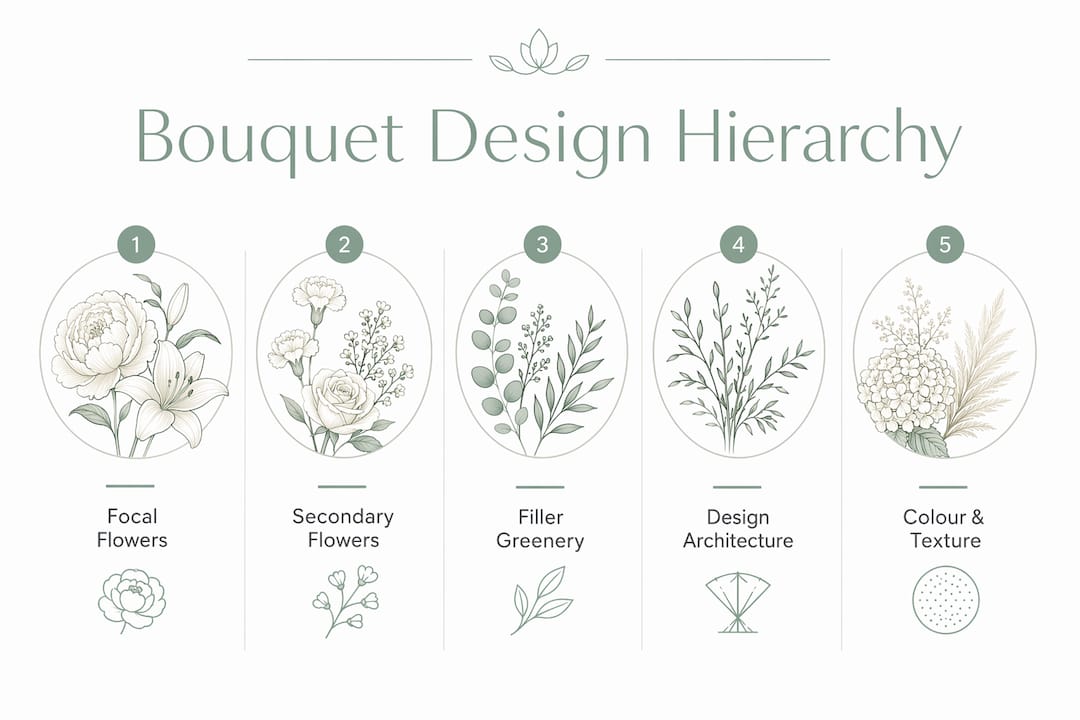
What makes a sophisticated bouquet: flower types and their roles
The foundation of any sophisticated bouquet rests on three functional categories of plant material. Designers consistently use focal flowers, secondary flowers, and filler greenery, with focal blooms placed in odd numbers such as three or five to create natural visual balance. This odd-number rule is not arbitrary. The human eye reads even groupings as static and formal, while odd groupings feel dynamic and alive.
Focal flowers are the large, eye-catching blooms that carry the arrangement. Garden roses, peonies, and exotic orchids are the hallmarks of luxury bouquet varieties because their petal structures are rich, layered, and visually complex. Standard supermarket bunches rely on spray carnations or alstroemeria as focal flowers. Premium designs do not.
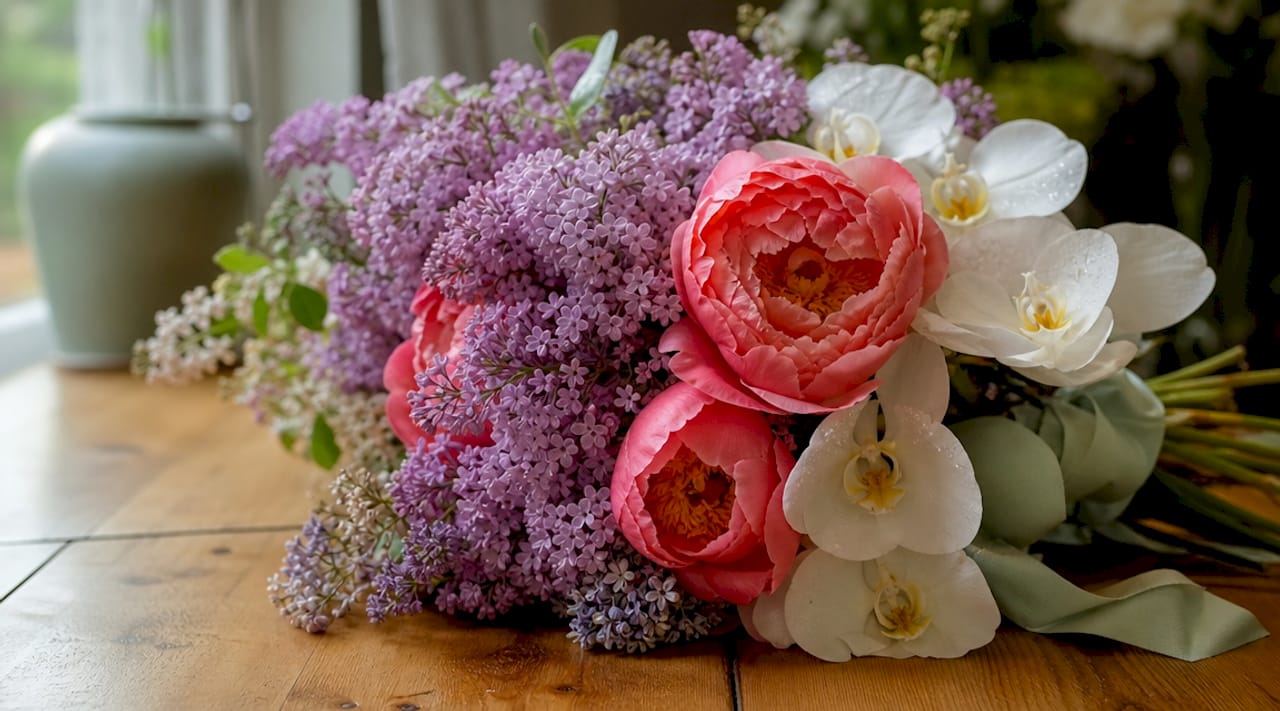
Secondary flowers add mid-size interest and texture between the focal blooms. Ranunculus, lisianthus, and sweet peas work well here because they introduce movement and softness without competing with the centrepiece blooms. Their role is to create visual rhythm across the arrangement.
Filler greenery defines the outer silhouette and provides volume. Eucalyptus, ruscus, and Italian ruscus are popular choices because their leaf shapes and tones complement rather than distract. The greenery also acts as a structural scaffold, holding the arrangement’s shape.
Pro Tip: When selecting a bouquet as a gift, count the focal flowers. Three or five large blooms surrounded by secondary flowers and greenery signals professional design intent. A bunch with ten identical stems of the same flower is a commodity, not a composition.
How does design architecture shape a bouquet’s sophistication?
Structure is what separates a professional arrangement from a gathered bunch. Expert florists build internal architecture using either a floral tape grid across the vase opening or a nest of greenery at the base, both of which hold stems in position and prevent the arrangement from collapsing or leaning. Without this foundation, even premium flowers will look haphazard within hours.
The three structural techniques that define a well-designed bouquet are:
- The floral tape grid or greenery nest. This creates a framework before a single bloom is placed. Stems slot into the grid at predetermined angles, giving the designer control over spacing and height from the outset.
- The spiral stem technique. The spiral technique locks all stems into a secure, domed shape without heavy wiring. Each stem is added at the same angle, rotating the bunch slightly with each addition. The result is a bouquet that holds its form and can stand independently when placed in a vase.
- Depth layering. Placing flowers at varying heights and depths builds visual shadow and volume. A flat arrangement, where all blooms sit at the same level, looks manufactured. Depth creates the impression of natural abundance.
“Negative space in a bouquet is not emptiness. It is the pause that makes the blooms worth looking at.”
Negative space is one of the most underused tools in floral design. Allowing gaps between blooms lets each flower’s form breathe and prevents the arrangement from reading as a wall of colour. The most editorial and modern bouquets use negative space deliberately, placing a single dramatic stem slightly apart from the cluster to draw the eye.
For those wanting to go deeper into professional structural methods, this step-by-step guide to luxury arrangements from Blumeflowers covers the process in practical detail.
What role do colour palette and texture play in bouquet sophistication?
Colour harmony and texture variety are the two factors most responsible for the emotional impact of an arrangement. A controlled palette conveys intention. A chaotic mix of unrelated colours signals a lack of design thinking, regardless of how expensive the individual flowers are.
Professional designers favour one of two approaches:
- Monochromatic palettes: All blooms in the same colour family, with variation in tone and saturation. A white and cream arrangement using garden roses, white ranunculus, and ivory lisianthus reads as quietly luxurious. The sophistication comes from the tonal layering, not from colour contrast.
- Closely related hues: Two or three adjacent colours on the colour wheel, such as blush, dusty rose, and burgundy. This creates warmth and depth without visual noise. Joanna Kustra’s Merry Flowers collection demonstrates this approach beautifully, using tightly curated palettes that feel cohesive rather than busy.
Texture contrast is equally important. Ruffled petals on a garden rose placed next to the structured, waxy surface of a tulip creates dimension. Soft, feathery astilbe next to the bold geometry of a protea creates drama. The key is contrast that complements rather than competes.
Pro Tip: Avoid combining more than three distinct textures in a single bouquet. Beyond three, the arrangement starts to feel cluttered rather than considered. Choose one dominant texture, one contrasting texture, and one neutral filler texture.
Overcrowding is the most common mistake in amateur arrangements. When blooms are packed too tightly, colours merge into a muddy visual mass and individual flower forms disappear. Restraint is a feature of luxury floral styling, not a limitation.
How do freshness, quality, and presentation define a luxury bouquet?
Quality over quantity is the defining principle of a luxury bouquet. A smaller arrangement built around three stems of imported garden roses and a handful of lisianthus will look more sophisticated than a large bunch of standard carnations and gypsophila. The petal structure, colour depth, and fragrance of premium varieties simply cannot be replicated by mass-market alternatives.
Stem care is the detail that separates a florist who understands their craft from one who does not. Cutting stems at a sharp angle rather than straight across maximises the surface area available for water absorption, extending the life of the arrangement significantly. This single step distinguishes a bouquet that lasts ten days from one that wilts in three. Blumeflowers provides practical guidance on this in their flower care tips resource.
The table below compares the key differences between standard and luxury bouquet presentation:
| Feature | Standard bouquet | Luxury bouquet |
|---|---|---|
| Flower varieties | Common carnations, spray roses, alstroemeria | Imported garden roses, peonies, orchids, ranunculus |
| Stem preparation | Straight cut, minimal conditioning | Angled cut, conditioned and hydrated before arrangement |
| Colour approach | Mixed, uncoordinated palette | Controlled monochromatic or closely related hues |
| Packaging | Cellophane wrap, basic ribbon | Heavyweight paper, velvet ribbon, bespoke gift box |
| Negative space | Minimal, densely packed | Deliberate, allowing blooms to breathe |
Presentation materials such as heavyweight papers, velvet ribbons, and bespoke boxes contribute directly to the perceived value of the arrangement. The unboxing experience is part of the gift. A beautifully wrapped bouquet signals that the sender considered every detail, not just the flowers themselves. For gifting purposes, this distinction matters enormously.
Floral design photographer Joanna Kustra’s Flori series illustrates how premium varieties and thoughtful presentation combine to create arrangements that feel genuinely rare rather than simply expensive.
Key takeaways
A sophisticated bouquet is built on three pillars: premium flower selection, deliberate structural technique, and a controlled colour and texture palette, all supported by careful presentation.
| Point | Details |
|---|---|
| Three-category structure | Use focal flowers, secondary flowers, and filler greenery in deliberate proportion for visual balance. |
| Odd numbers for focal blooms | Place three or five focal flowers to create natural, dynamic visual rhythm rather than static symmetry. |
| Spiral and layering techniques | Apply the spiral stem method and depth layering to build structural integrity and visual fullness. |
| Controlled colour palette | Limit the arrangement to monochromatic or closely related hues to convey intention and elegance. |
| Quality over quantity | A smaller arrangement with premium peonies or garden roses outperforms a large bunch of standard blooms. |
Why the details you overlook are the ones that matter most
I have looked at thousands of bouquets over the years, and the ones that genuinely stop you are rarely the largest or the most expensive. They are the ones where someone made a decision about every single stem. The angle of a single garden rose placed slightly higher than the rest. The deliberate gap between a cluster of ranunculus and the outer greenery. These are not accidents. They are the result of understanding that restraint and intention are the actual tools of sophisticated floral design.
The mistake I see most often, even from people who clearly care about flowers, is confusing abundance with sophistication. More stems, more colours, more variety. The result is always the same: a bouquet that looks busy rather than beautiful. The most classy arrangements I have encountered use fewer varieties with greater precision, and the effect is always more memorable.
If you are selecting a bouquet as a gift, look at the packaging before you look at the flowers. A florist who invests in velvet ribbon and a considered box understands that the experience begins before the wrapping comes off. That attention to detail almost always extends to the flowers inside. It is a reliable signal of craft.
— Steve
Discover sophisticated bouquets from Blumeflowers
Blumeflowers designs every arrangement around the principles covered in this article: premium varieties, controlled palettes, and presentation that reflects the quality of the blooms inside. The beautifully simple peony bouquet is a strong example of quality over quantity in practice, built around one of the most luxurious focal flowers available. For a cleaner, more graphic aesthetic, the tulip bouquet offers elegant colour and structured form. Both are available for same-day and next-day delivery across Birmingham and Solihull. Pair either with chocolates or candles for a complete gifting experience that matches the standard of the flowers.
FAQ
What are the three flower categories in a sophisticated bouquet?
A sophisticated bouquet uses focal flowers for visual impact, secondary flowers for texture and rhythm, and filler greenery for volume and structure. Each category plays a distinct role in the overall composition.
Why do florists use odd numbers of focal flowers?
Odd numbers such as three or five create dynamic visual balance because the eye cannot divide them evenly, producing a more natural and engaging arrangement than even groupings.
What is the spiral stem technique?
The spiral technique involves adding each stem at the same angle while rotating the bunch, locking all stems into a secure domed shape without wiring. It is the standard method for creating a bouquet that holds its form independently.
How does packaging affect the perception of a luxury bouquet?
Heavyweight paper, velvet ribbon, and bespoke gift boxes signal craftsmanship before the flowers are even seen. Premium packaging protects delicate blooms during delivery and forms a direct part of the gifting experience.
What colour palette works best for an elegant floral arrangement?
Monochromatic palettes or closely related hues such as blush, dusty rose, and burgundy create the most refined results. Limiting the palette to two or three tones prevents visual noise and allows the flower forms themselves to take centre stage.